AI That Owns Business Outcomes: Our Investment in Hone
A year ago, a friend introduced us to Moritz Stephan as one of the most impressive all-around talents at Cognition. As we got to know him better, we could see why Moritz was so beloved in the company. In particular, we were struck by his integrity and technical depth, and by his ability to hold seemingly contradictory traits: truth-seeking yet imaginative, adventurous yet commercially minded, impatient yet fully committed once he decides on a path.
Originally from Austria, Moritz studied computer science at Stanford, where he did agent research in Chelsea Finn’s lab. He later joined Cognition as an early employee, where he was part of a small team of “brain engineers” who built the core of Devin, owning the planning-and-execution harness at the heart of the product and much of the company’s work on long-horizon agents. Widely regarded as an execution machine, he was a one-man engineering pod. His name became company shorthand for excellence and productivity; people would say, only half-joking, that Cognition needed “five more Moritzes.”
More than an executor, Moritz was also among the first engineers to identify and push for Cognition’s move into enterprise, back when they had the green shoots of the technology but not yet the market. CEO Scott Wu eventually tapped him to serve as Chief of Staff, a role in which Moritz oversaw everything from company strategy to hiring to product decisions.
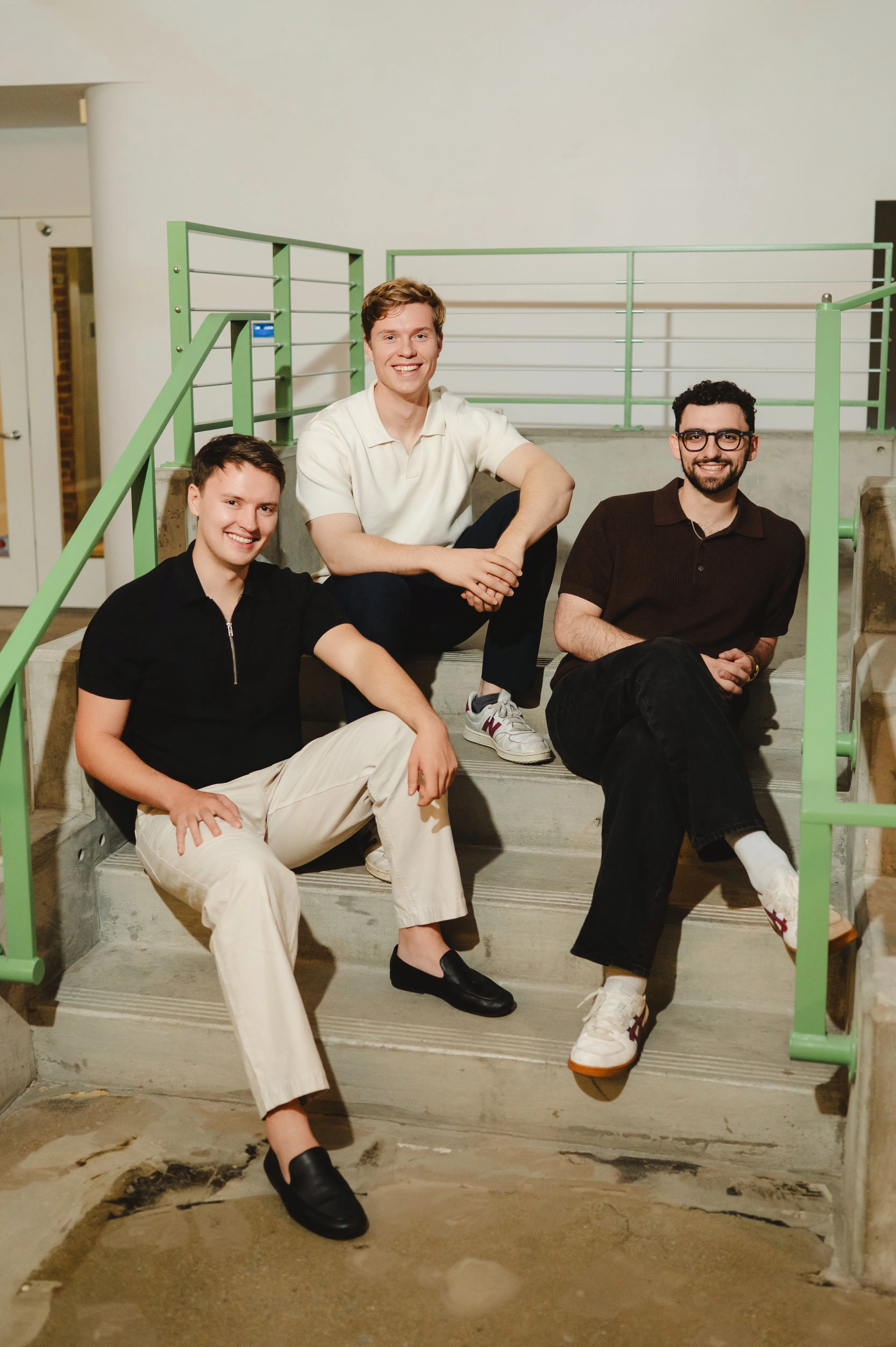
Our conviction only grew when we met the co-founders Moritz has brought together. Oliver Brady was an early engineer at Harvey before joining Mercor, where he helped build and lead its enterprise effort. He’s energetic, curious, and a talent magnet who former colleagues credit with many of Mercor’s strongest hires. Carlo Kobe, a Thiel Fellow, left Harvard to co-found Fizz with Moritz in 2021. After Moritz returned to Stanford to finish his degree, Carlo continued to lead the company for several years. He’s a natural storyteller and operational machine who pairs big ambition with a strategist’s grasp of positioning, branding, and hiring.
Together, they’re building Hone to address the widening gap between what frontier AI can do and the value organizations get from it. Outside of software engineering, today’s agents are largely still tools inside human-run workflows. You prompt them, they complete a task, and they stop. Hone’s Engine owns entire outcomes instead. Given a role like procurement coordinator or outbound rep, an Engine explores the company’s systems, studies past work, and writes its own skills and tools. It’s tested against prior decisions before going live, keeps improving from mistakes and corrections, and acts on events rather than prompts. Because a whole team shares one Engine, a correction from one person improves it for everyone. It’s the long-horizon agent work Moritz led at Cognition, now applied across every function beyond coding.
Hone is already working with leading AI companies and large enterprises to put autonomous systems to work on their hardest challenges. And the team is growing quickly, adding engineers and operators from places like Ramp, Midjourney, and Decagon, plus others who’ve set aside plans to start their own companies in favor of joining this exceptional group on their mission.
As frontier models handle ever-longer and more complex tasks, we believe value will accrue to whoever owns the layer between the model and the enterprise. We’re thrilled to partner with Moritz, Oliver, Carlo, and the Hone team, together with our friends at Benchmark, as they build AI that can own entire outcomes across the organization.
Published — Oct. 8, 2026