

You hit a certain point -- a bonus lands, some equity vests, or you look up one day and realize you've saved more than you expected -- and looking after your own money stops being optional. It turns into a job, one you never trained for and have to fit around your actual life.
American finance has a strange shape. If you have almost nothing, an app will manage your money beautifully for next to nothing. If you have a fortune, a private bank gives you a human being who knows your kids' names and answers on the first ring. Everyone in between -- which is to say most of the country, and roughly $20 trillion in assets -- gets a login, a statement they don't fully understand, and the nagging sense they should be doing something smarter with what they worked so hard to build. The largest pool of wealth in America belongs to the people the industry serves worst.
What people want has almost nothing to do with chasing investment "alpha". They want one person who understands the whole picture -- the mortgage, the aging parents, the kid about to start college, the business they can't decide whether to sell -- and who can tell them, in plain English, whether they're going to be okay. They would happily hand the entire thing to someone they trust and never think about it again.
And yet it is one of the few corners of modern life that has gone backwards. Almost everywhere else, service has grown more personal and more transparent at once: your car shows up on a map as it approaches, a text arrives the moment a prescription is ready. Wealth management went the other way and stayed a black box, where you can't quite tell what you're paying and the advice seems to change depending on who's giving it.
That is about to change. Over the next two decades, around $84 trillion will pass from baby boomers to their children -- the largest handoff of wealth in history -- and the people inheriting it grew up expecting things to be digital, transparent, and built around them. They will not accept a 1-800 number and a fax machine. At the same time, someone good is finally building the alternative. For years, Index has backed the companies that dragged finance into the modern world -- Robinhood, Wealthfront, and Revolut among them -- and they tend to rhyme: each took something clunky or gated and rebuilt it so well that millions of ordinary people wanted in. For just as long, we have been looking for the team that would finally do the same for wealth management. We think it is Arca.

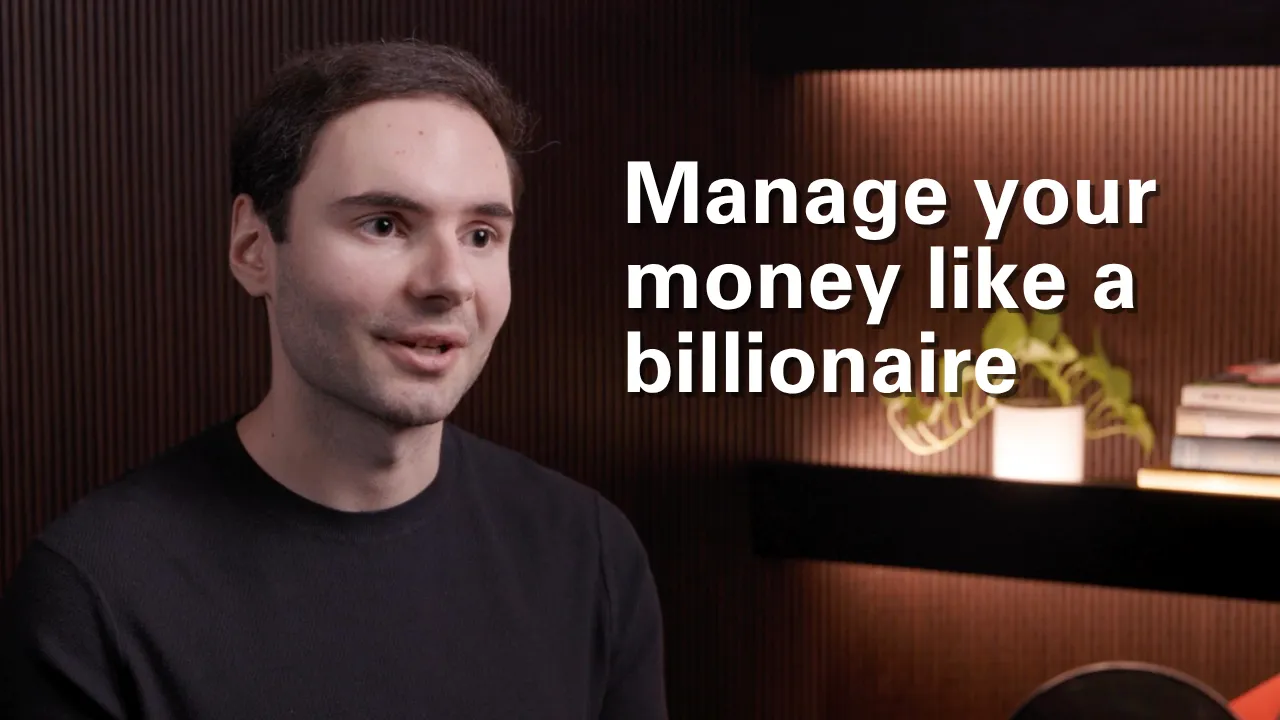

What Arca really sells, underneath the portfolios and the planning, is a feeling: the ease of knowing your money is handled by a person who knows you, and the freedom to stop thinking about it at all. It might be the closest thing to bliss anyone has managed to attach to personal finance -- and it has nothing to do with being rich. It comes from finally being taken care of.
That experience runs on a different model. Arca is AI-native: every client is paired with an expert human advisor, and every advisor is backed by an agentic platform. The pairing makes the experience personal and a more premium relationship that leaves you better off. The part you see is the advisor: a person, with a name, who knows your situation and picks up when you call. They build and run your portfolio, rebalance it as markets move, and handle the tax work most people never realize is costing them -- harvesting losses, timing withdrawals so you keep more of what's yours. The plan is real, too: when you can retire, whether you can afford the house, what happens to your kids, how much you can do for your parents. And when life changes -- you sell the company, have a baby, get an offer you're unsure about -- they are the call you make, usually before you've even thought to ask. Over time, the same team takes on more of what you would rather not handle yourself, from estate planning to insurance.
That kind of attention has been rare for a structural reason, not a human one. Millions of households want this exact kind of personal advice. But wealth management was never built to deliver it at scale, which is why advisors end up buried in operational complexity -- prep, paperwork, rebalancing, compliance -- instead of building trust with the people they serve. Arca's platform takes that work off their plate. Freed from it, an Arca advisor can do the part that matters most: get ahead of your decisions, shape the advice around your real life, and build a relationship in which you feel looked after rather than processed. That is the whole bet -- the warmth of a private banker, finally within reach of everyone.

Index's Jahanvi Sardana and Arca's Rron Rexha at a Knick's game
We have known Rron Rexha, who founded Arca, for years. We knew we wanted to back him long before he knew what he wanted to build. He went deep into wealth management, and won over the people who know it cold -- Bill McNabb, former CEO of Vanguard; Jason Wenk, founder and CEO of Altruist; Morgan Housel, bestselling author on wealth. He kept asking the questions everyone in the business had long stopped asking: why is it done this way, why does it cost this much, why does it take this long -- and then set about building the better answer.
Everyone should get to feel taken care of with their money, not only the people who already have a lot of it. For most of us, it has never really been on offer. Arca is changing that, and we're glad to be in it with them.
Published — June 25, 2026
-
 This link opens the post, "Building A New Energy Model For Europe: Our Investment In Nomos"
Building A New Energy Model For Europe: Our Investment In Nomos
This link opens the post, "Building A New Energy Model For Europe: Our Investment In Nomos"
Building A New Energy Model For Europe: Our Investment In Nomos
-
 This link opens the post, "Backing Mistral, From First Check to Europe’s Next Powerhouse"
Backing Mistral, From First Check to Europe’s Next Powerhouse
This link opens the post, "Backing Mistral, From First Check to Europe’s Next Powerhouse"
Backing Mistral, From First Check to Europe’s Next Powerhouse