Radical Care: Why Alan’s Co-Founder is Rewriting The Rules of Healthcare
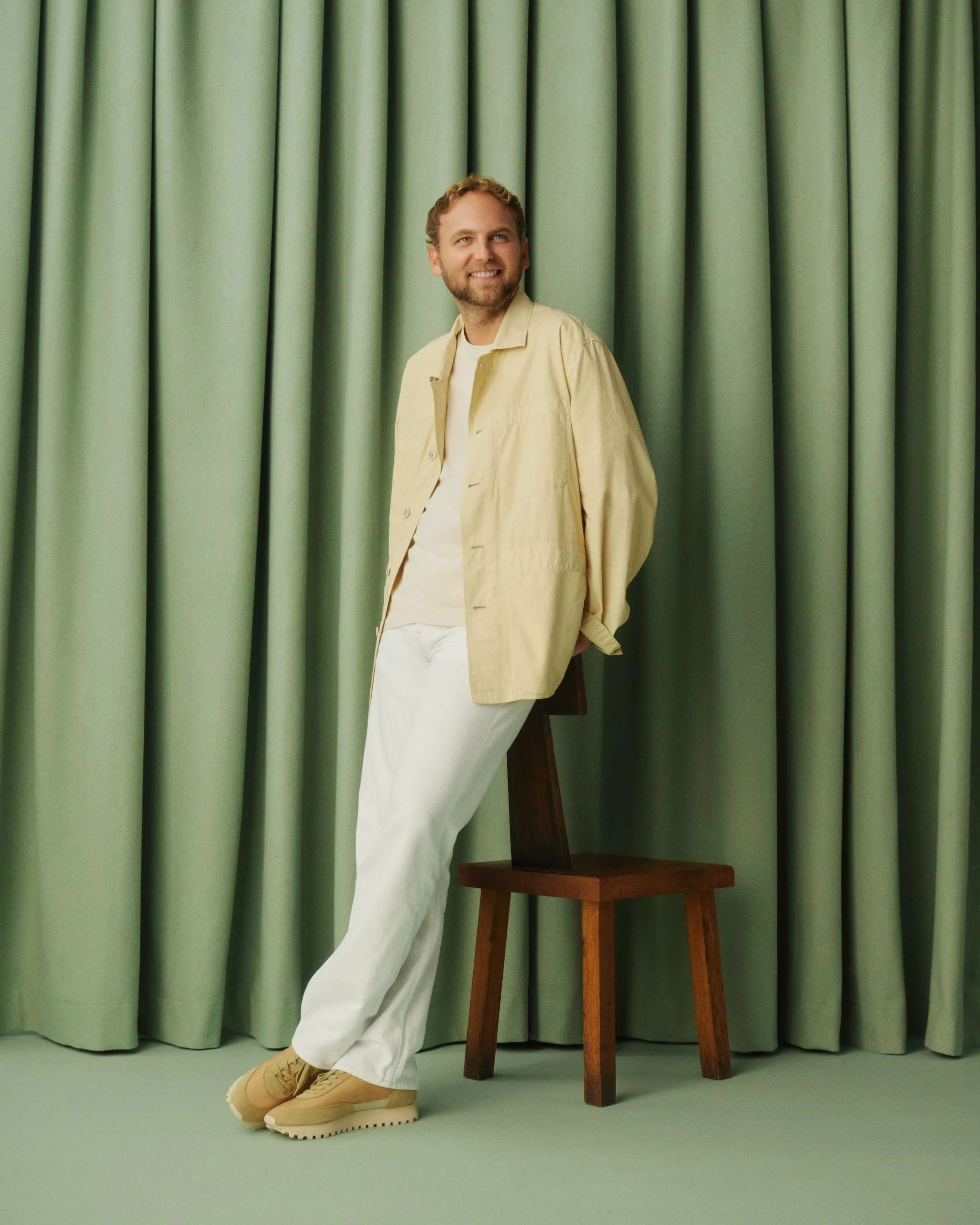
Jean-Charles Samuelian-Werve built a multi-billion-dollar healthcare company on radical transparency, immigrant grit, and a belief that technology alone won’t save us.
The elevator directory at 117 Quai de Valmy in Paris reads like a syllabus in comparative mythology. There’s a meeting room called Anahita, for the Zoroastrian goddess of waters; Dhanvantari, the Hindu lord of Ayurvedic medicine; and Ixchel, the Mayan goddess of midwifery, who took the form of a wise and aged jaguar. While these names speak to the near-cosmic ambitions of the startup inside, others hint at its commitment to remain human and grounded even as it tries to heal the world. There’s a room called Place de Vosges, where the early team used to go for drinks, and one named Calanques, for the limestone cliffs near Marseille where they had an offsite, and where the company’s CEO grew up.
Alan’s ultimate ambition is to deliver end-to-end personalised healthcare for all, and to do it where people already are – on their phones, in their homes and at work.
That company is Alan: a global healthcare platform, the first independent health insurer to be licensed in France since the mid-1980s, and now one of the most closely watched technology businesses to emerge out of Europe. Its motivating premise is that healthcare, almost everywhere, remains frustratingly reactive, fragmented and opaque; insurance, care and prevention exist in separate silos, and patients are left to navigate a broken system, alone.
Alan, which now covers millions of members around the world, set out to collapse all that into a single platform. Through its app and partner clinics, members can consult a doctor around the clock, get medically robust advice from an AI assistant, be reimbursed in minutes, and follow tailored programmes for mental health, nutrition, sleep and chronic pain. The result is a shift in care as consequential as the creation of hospitals in the 18th and 19th centuries. Alan’s ultimate ambition is to deliver end-to-end personalised healthcare for all, and to do it where people already are – on their phones, in their homes and at work.
Alan occupies five floors of a glass-panelled office block, whose tiled colonnades make it appear to float on stilts above the plane trees and iron footbridges of the adjacent Canal Saint-Martin. Inside the canteen on a recent cold and overcast day, the noise is riotous and convivial. No one pays particular attention as a slight man with a gentle mien and a simple button-down shirt, rolled up to the elbows, walks through to fetch himself a glass of water.
“My mindset was to make the office somewhere that people genuinely enjoy, but not too fancy,” says Jean-Charles Samuelian-Werve, Alan’s 38-year-old CEO. Jean-Charles wanted Alan’s HQ to feel slightly unfinished – a reminder that there is always more to strive for, and a place of purposeful work, rather than a gilded substitute for the rest of your life. “You want people to remain hungry and obsessed with the mission,” he says. This doesn’t mean there are no perks – lunch is free, there are doctors and healthcare workers on staff, plus a sports room, a nap room, and a rooftop with a panoramic view across the canal – but nothing is lavish or showy. “Beauty matters, but it should also be a lean, clean and simple kind of beauty,” he says.
Purple is a consistent presence throughout the space, as is Mo – Alan’s cuddly mascot, which Jean-Charles is at pains to explain is not a polar bear. “Whatever he is, we wanted him to personify caring,” Jean-Charles explains with a wry half-smile. “The truth is that there used to be this video of a screaming marmot which was the first result when you typed “Alan” into YouTube. We didn’t want to be just another boring healthcare brand, so we kind of took that and made it our own.”
The name “Alan” came from two figures the founding team admired: Alan Turing, the inventor of the modern computer, and Alan Watts, a British philosopher interested in personal integration and wellbeing, and who was strongly influenced by Buddhism, Taoism and Hinduism. “His approach spoke to me, in terms of using technology to help people be the best version of themselves,” Jean-Charles says, sipping his water. (Later, he tells me he doesn’t drink coffee or tea: “the one time I tried caffeine I was all over the place”.)
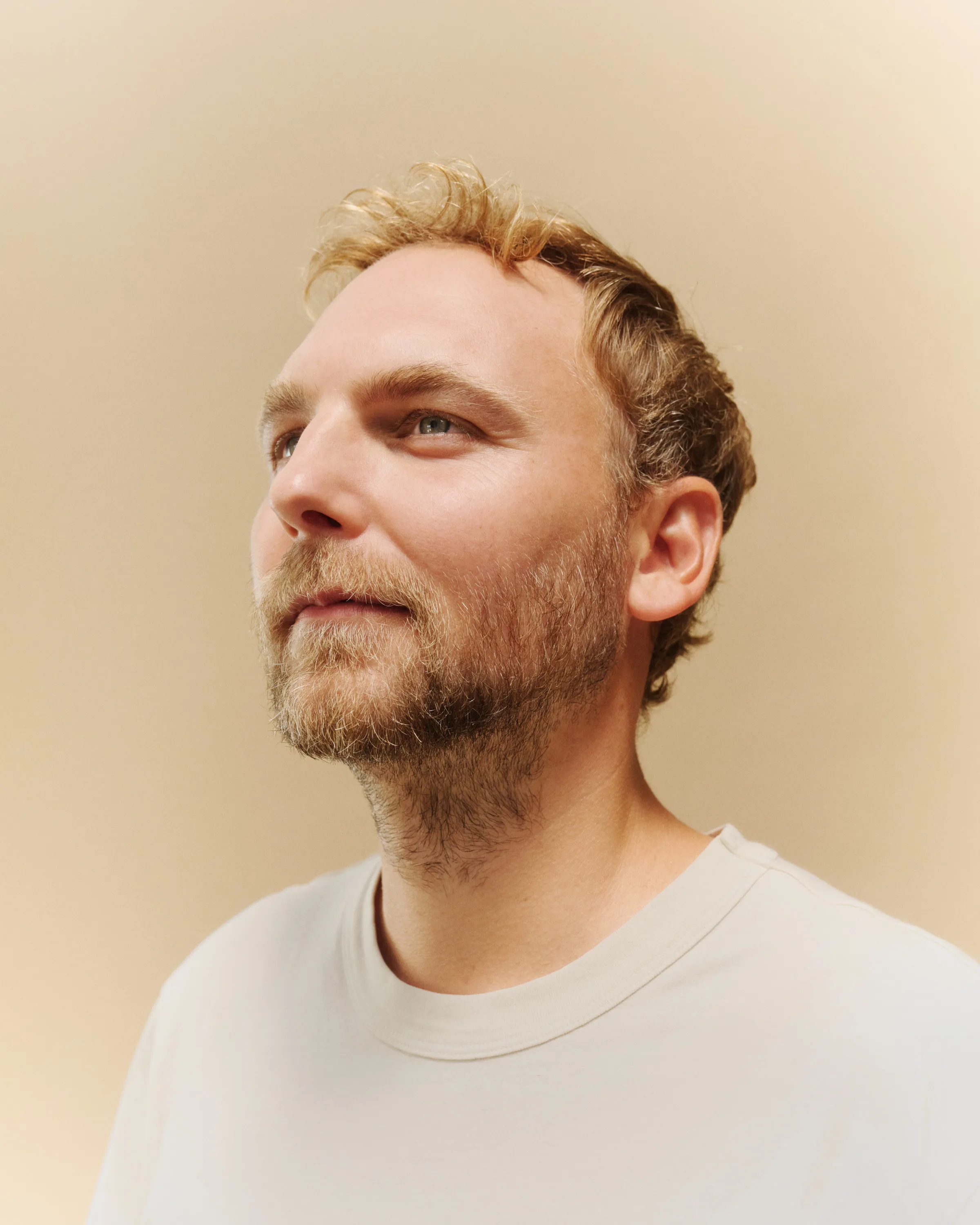
To understand what really drives Jean-Charles – or JC, as he is almost universally known – you have to go back to 1923, when his paternal grandparents arrived in France after fleeing the genocide in Armenia. France was tough and welcoming by turns, he says. Eventually the pair succeeded in creating and running a string of small clothing shops in the South of France, where they continued to work into their late eighties. “When you have that defining moment in the history of your family, where everything was lost, you carry a feeling that you can always rebuild,” JC says. “Even if people take stuff away from you, you know you always have the capacity to work, to learn, to be a good person, to care about your community, to help your children do better than you.”
“I could see these two doctors, giving their soul to their jobs, but surrounded by these terrible tools. There was a gap.”
Jean-Charles Samuelian, Alan
JC’s parents, both psychiatrists, offered a different but complementary inheritance. His father was the head of a psychiatric department in a hospital in Marseille, while his mother specialized in eating disorders. This meant JC grew up surrounded by both the dedication and the dysfunction that underpinned the French healthcare system. During a hostage crisis at the Marseille airport, when terrorists seized a plane, JC’s father was dispatched to the frontline to advise on the negotiation; afterwards, he also supported the victims through their psychological recovery. At another point, one of JC’s mother’s teenage patients stopped eating and died, a loss which affected her deeply; one of JC’s cousins also suffered from schizophrenia. As a child, then, JC was accustomed to the phone ringing at two in the morning with people in crisis, and watching his parents negotiate how to protect the family while showing up for their patients. “I could see these two doctors, giving their soul to their jobs, but surrounded by these terrible tools. There was a gap.”
I ask JC whether his father’s choice of psychiatry was, in part, a response to the foundational trauma on the Armenian side of the family. “Oh, definitely,” he says. “You usually become a psychiatrist because you have things to solve for yourself.” But the household wasn’t burdened by heaviness. His parents gave JC and his sister what he described as unconditional love and freedom – high expectations with high support, along with the liberty to pursue whatever seized his imagination. What seized his, at the age of nine or ten, was a computer.
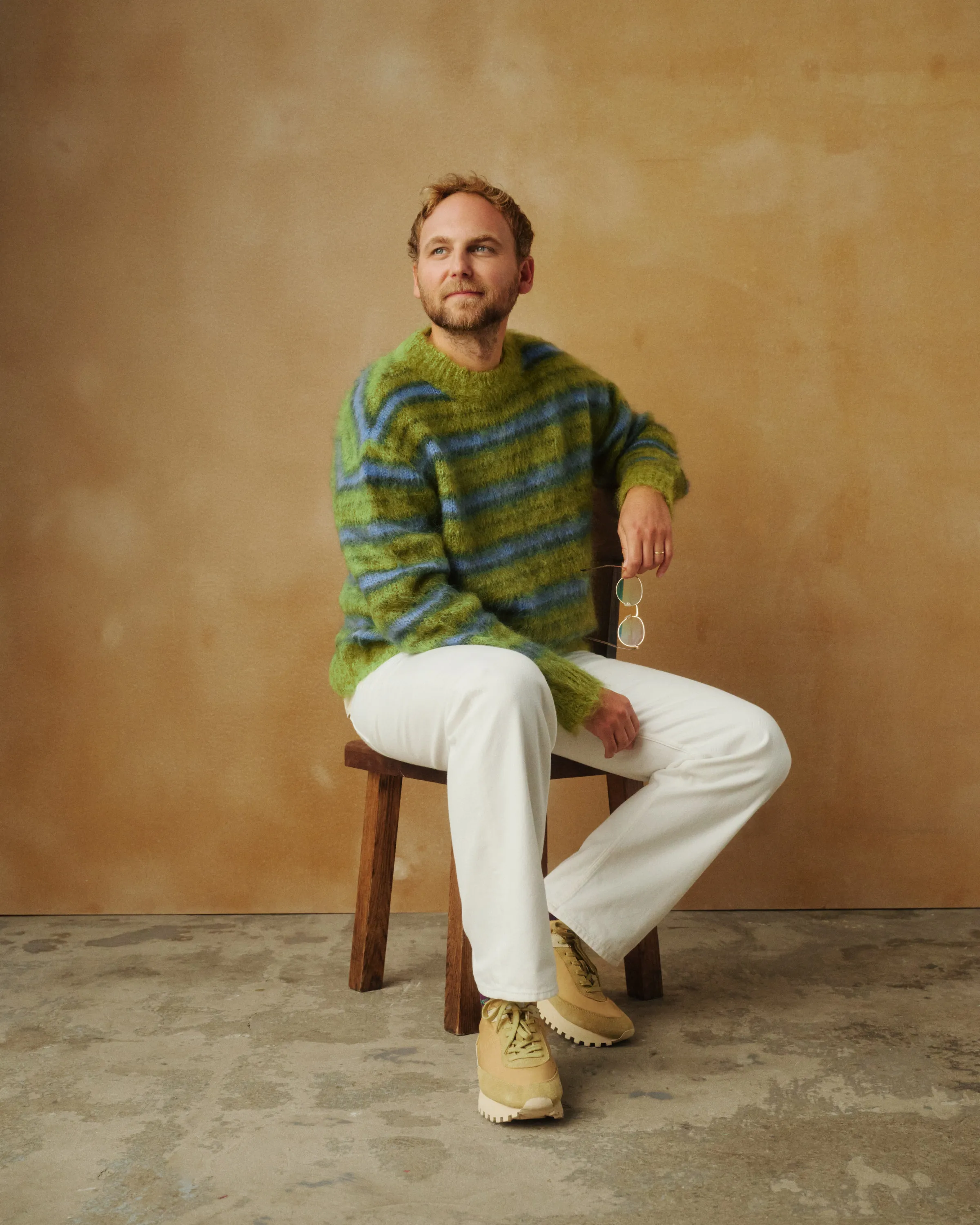
JC built his first website in the late 1990s, a fan page about jetplanes. By thirteen, he was selling websites to clients for money. He and his friends pitched business ideas to the entrepreneurial father of a school friend – unusually for JC’s time and milieu, a man who had built media companies across Eastern Europe, China, and Africa, before anyone else thought to go there. The kids never pushed hard enough to turn any of the pitches into real ventures, but JC had made an essential discovery. “The idea that you have something in your mind, and then if you tell a machine, you can deliver it and show it to the world,” JC says. “That was a huge moment in my life.”
He excelled in the famously gruelling French classes préparatoires, two years of intensive mathematics and physics, then entered the École des Ponts ParisTech, one of France’s elite engineering schools. On the first day, he met Charles Gorintin.
“He was very Marseille,” Gorintin tells me. “Very tan. A tiny bit of an accent. The style of a guy from the south of France.” The stereotypes of a Marseillais run toward the exuberant and the exaggerating, with a warmth that can overwhelm the more buttoned-up Parisian temperament. Yet JC describes himself at the time as “quite shy, still an introvert who found so many people overwhelming”. How to explain the seeming contradiction? “Well, he probably thought of himself as shy compared to where he was from,” notes Gorintin, eyes twinkling. “The truth is that he can fit in with anyone, get into conversation with anyone. He’s a social chameleon, in a way that I really admire.”
“The idea that you have something in your mind, and then if you tell a machine, you can deliver it and show it to the world,” JC says. “That was a huge moment in my life.”
Within months, JC and Gorintin had cemented their friendship – sleeping over at each other’s apartments, and running for the student sports bureau on a prank ticket they called Le Fair Ponts, a play on words between “fair play” and the name of the school. JC saw in Gorintin someone who could be slow to speak in group settings, but when he did, always said something orthogonal and incisive. “He’s just an extremely kind and smart person, with a very atypical way of thinking about the world,” JC recalls. “I really fell in love with that.”
In the speech Gorintin gave at JC’s wedding, he traced the acceleration of his friend’s career with comic precision: when Gorintin was playing with Legos as a tween, JC was already selling websites. When Gorintin was a twenty-year-old student, JC was already changing the aircraft-seat industry. By forty-five, Gorintin predicted, JC would make the concept of death obsolete: “Because nothing is impossible for JC.”
The aircraft-seat company he started was Expliseat, co-founded with friends Benjamin Saada and Vincent Tejedor when JC was just twenty-two. Their product, the TiSeat, was the world’s lightest certified aircraft seat: four kilograms per passenger against an industry standard of eight to twelve, built from titanium and carbon-fibre composite, with thirty parts instead of the usual three hundred. It eventually made its way onto the Airbus A320, and airlines using it save an estimated three to five hundred thousand dollars in fuel per aircraft per year. The company is still thriving today, with a factory near Angers producing tens of thousands of seats a year.
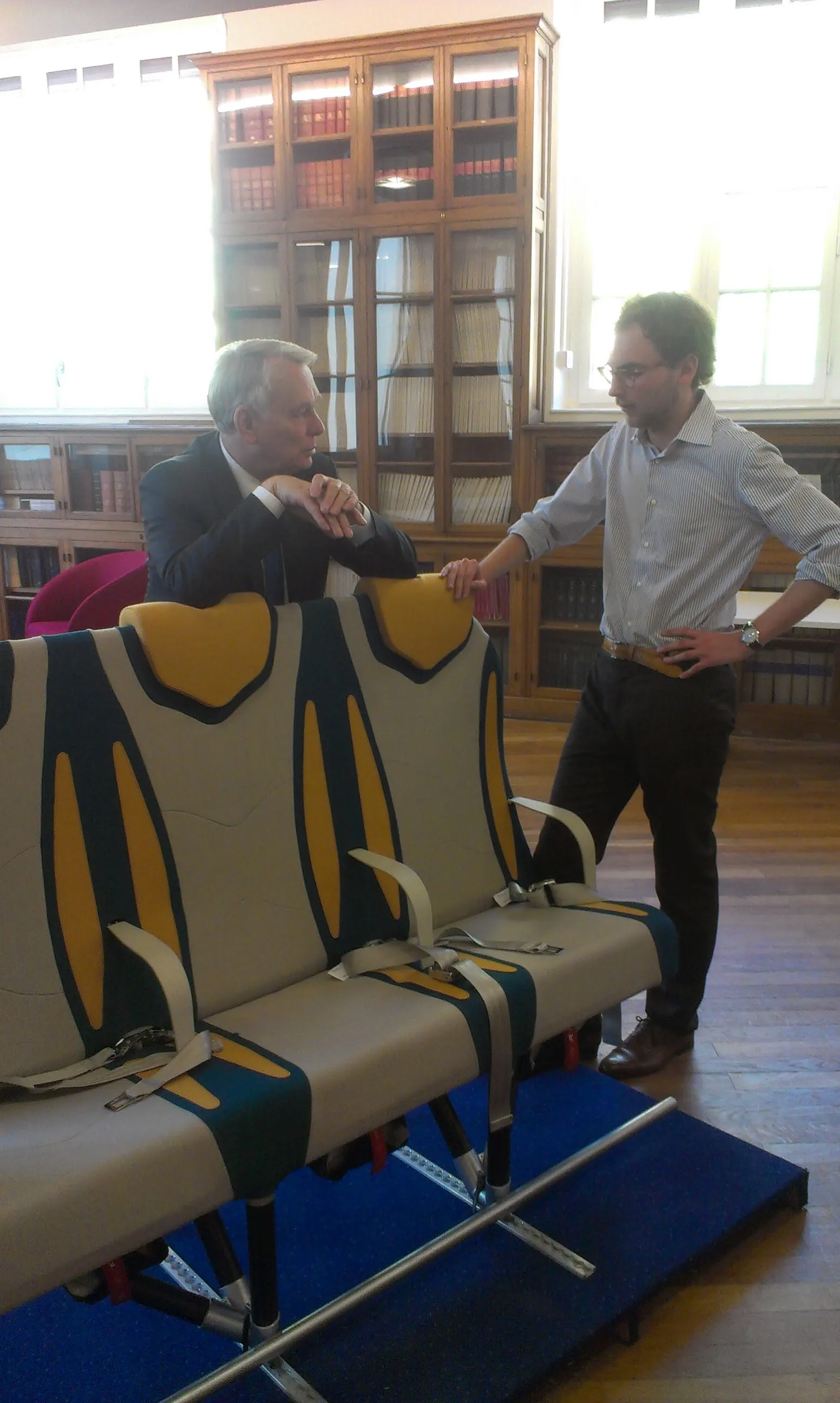
Age 22, JC co-founded Expliseat. Their product, the TiSeat, was the world’s lightest certified aircraft seat.
JC sold his Expliseat shares in 2015. The lessons he took with him were partly about grit, and partly about the centrality of culture. “We’d never had a job or even an internship, so we didn’t really know how important culture was. We learned everything the hard way. The alignment in terms of values with your co-founders and with your team, the people you hire – every single hire is going to affect the trajectory of the company.” The product was extraordinary, a fusion of engineering and design, but the operating system underneath was improvised. JC vowed that the next time would be different.
The other lesson for JC was about striving for a deeper sense of impact and purpose. Aircraft seats were not his ikigai, he says, the Japanese concept that captures the intersection of what you love, what you’re good at, what the world needs, and what you can sustain. “Expliseat was an amazing journey,” he says, “but I don’t think it was the topic I would dream about for decades and decades.” What he couldn’t stop thinking about, he says, was the healthcare system of the future.

Gorintin – by now working in Silicon Valley for the likes of Facebook and Twitter, as they were then known – remained close to JC. In mid-2015, when Gorintin found himself stuck in Paris for a month after losing his passport, JC asked Gorintin if he might consider starting a company together. A month later, JC flew to San Francisco, and Gorintin confirmed he was in for what would ultimately become Alan. Gorintin returned to France in January 2016, and the pair decided to live together. Eventually they settled on a multi-level converted factory space, with a light-filled dining room to serve as their first office, and the bedrooms on the floor above.
Far from putting pressure on their friendship to live and work in the same apartment, that closeness “was essential for getting our brains completely connected,” Gorintin says. To decompress, he and JC would play vintage NBA Jam on a Sega Mega Drive, eventually winning the championship. At their housewarming party, Gorintin met the woman who would become his fiancée.
Index's Jan Hammer describes JC as a “90/10 founder” – someone who is ninety percent in control, but retains the crucial ability to seek advice, accept challenge and change course the remaining ten percent of the time.
Fabrice Staad, Alan’s General Manager for France, was employee number eight. He’d received a cold email from JC – a few sentences about wanting to completely transform insurance and healthcare, a reference to building a “dream team,” and a question: did he want to talk? What Staad discovered in JC was a striking combination of extreme strategic ambition paired with a granular emotional intelligence. “He’s someone who deeply cares about the people he’s working with,” Staad says. “He knows on the spot if you’re well or not, through your mood, your tone of voice, or even what you’re writing.” Early on, Staad arrived at a one-on-one meeting visibly anxious about some numbers. (“He’s so organized – you cannot imagine how well-structured and somehow intense the discussions can be with him.”) But instead of getting stuck into the substance, JC opened their shared preparation document and wrote, in large letters at the top: You don’t look good. We’re just going to talk about how you are today. The numbers could wait. “He wants to put things on the table so that there’s nothing which is not being discussed,” Staad says. “He pushes people to be very transparent with how they feel.”
Jan Hammer is a partner at Index Ventures who has backed Alan since its early funding rounds, and who counts JC among the most exceptional entrepreneurs he has worked with in his career. He describes JC as a “90/10 founder” – someone who is ninety percent in control, but retains the crucial ability to seek advice, accept challenge and change course the remaining ten percent of the time.
Early in their partnership, Hammer offered JC some advice about growth benchmarks based on his knowledge of a larger portfolio company. Hammer describes how JC pushed back. “That’s interesting and it’s a useful data point,” he told Hammer, “but you can do more for me. I don’t want a small tactical output from your brain. I want your original thought.” He wanted to know, in absolute terms, how far Alan’s business could go, not how it compared to anyone else’s. “That really emboldened me to think from first principles,” Hammer says now, “not just with him, but with every founder I worked with from then on.”
Hammer goes on to describe JC’s superpower via the image of a triangle. One corner represents a level of ambition “that borders on the insane”; wherever the bar is, JC wants to ten-times it. Another corner is his capacity to simplify what needs to be made real and concrete, and to render things actionable and specific. “What’s the to-do? Who’s doing it? What’s the action? If someone requests a meeting, he needs to know what’s going to come out of it.” The final piece, Hammer says, is JC’s uncanny ability to see around corners, to bank one achievement as the stepping stone for the next idea that nobody else has yet perceived. “JC sees the journey,” Hammer says, “and he’s able to deliver the path to make the journey an outcome.” When Index first invested, Alan’s largest customers were freelancers and micro-businesses. Then small businesses became the small customer and medium-sized firms the target. Then enterprise. Then multinationals and government ministries. Now Alan is in discussions with sovereign entities and entire countries. As the German proverb goes, Hammer notes, appetite grows with eating.
***
Huddling around the dining table at their apartment-office in 2016, the first thing Gorintin and JC wrote down had nothing to do with Alan’s product or business. Instead, they returned to the idea of a company operating system – the kind of values and culture they wanted Alan to embody. The basic ingredients have broadly survived the passage from a handful of people to hundreds: telling and sharing everything, giving people freedom with responsibility, supporting individuals on their journey of growth, and moving fast with huge ambition. “Everything is accessible: the board decks, every decision we made, all the numbers, my salary, my equity, when we failed, when we succeeded, since the beginning,” JC says. “It does require radical discipline, because once it’s there, you cannot go back. So you need to build systems, but once you do, it massively accelerates the company.”
The inspiration for this system came from multiple sources, including the open-source community and certain practices Gorintin had observed at Facebook. But JC’s contribution, according to Gorintin, was to take every idea to its logical extreme. “He’s got this ability to go all the way,” Gorintin says. Early on, when they started meeting in smaller sub-groups to decide the product roadmap, JC shut the practice down entirely: everything had to be visible, everything in writing. Gorintin admitted it was painful at first. But the logic was sound. “If you start at the extreme, it’s much easier to come back to the middle if it doesn’t work. Start at the middle and you’ll never reach the edge of what’s possible.”
The transparency goes as far as the inner workings of JC’s mind. He has written a weekly company update every week since Alan started, a ritual he has never once interrupted. He is a broad and avid reader, and frequently shares insights from his research with the company. He writes personalised anniversary messages on Slack for every member of his team, which have grown over the years from a few lines to poems and videos. Staad told me about these with something close to wonder. “He always finds the time to make you feel seen and valued, despite having an amazing number of things to do. It’s truly impressive, especially when you know everything he’s involved in.”
***


Hammer echoes this. “Everything negative gets reframed as an opportunity. The glass is usually half full, but if it does empty out below the half, JC isn’t afraid to pour out the water and start again.” Hammer notes that JC strikes a balance between human warmth and a dedication to excellence, which can be a difficult line for founders to tread when they inevitably feel deeply bonded to early team members they may need to let go at later stages of the journey. “He’s not afraid of change; he’s loyal on a human level but he’s a ruthless decision maker on a professional level,” Hammer says.
Towards the end of our time together, I ask JC if he thinks his grandparents would be proud of what he’d achieved. He takes a moment. “Honestly, I still feel that we are at the very beginning of the journey,” he says. “The most important thing for me is my inner compass, that how I behave, how I interact, how I spend my time on a daily level aligns with what I believe to be right.” He doesn’t dwell on the question of what people think of him, but instead sketches out what he hopes will come next for Alan. Most imminently, that’s ten million members, but beyond that, his aspirations span the globe – including transforming healthcare at the scale of whole countries and populations, and providing universal, personalised medicine by bringing coverage, care and wellbeing together in a single feedback loop. “I want Alan to be there in a century,” he says, “and to be a company that improves the lives of hundreds of millions of people, if not billions.”
Outside Alan’s offices, if you cross the canal and walk east along Rue Bichat, within a few minutes you’ll reach the gates of the Hôpital Saint-Louis. It is one of the oldest hospitals in Paris, founded by Henri IV in 1607 because the existing system was overwhelmed and failing its patients during the plague. It has been treating the sick for over four centuries. JC might call that a good start.
I’m not going to say everything was easy, because everything was hard. But it was delightfully hard. [...] If it was not super hard, other people would have done it and we would have no differentiation.Jean-Charles Samuelian-Werve, Co-founder of Alan
What JC is involved in, beyond Alan, opens up another facet of his character. In late 2021, well before ChatGPT was unveiled to the world, he and Gorintin began thinking obsessively about the implications of large language models for Europe’s technological sovereignty. By the summer of 2022, JC had drafted a two-page document proposing a European AI initiative, which he pitched to Xavier Niel, the French telecoms billionaire. He then met Arthur Mensch, a researcher at Google DeepMind. With Mensch as CEO, this led to the creation of Mistral in April 2023 – now the most significant foundation model company to emerge from Europe, worth upwards of twelve billion euros.
JC has had a huge influence on Mistral’s trajectory as a co-founder and advisor, meeting Mensch weekly in the same building where Mistral leases office space from Alan. JC, in typically modest style, plays down his contributions, describing himself and Gorintin as “catalysts” for the company. When Hammer visited the Alan offices around this time, JC mentioned off-handedly that he was incubating an open-source AI startup a couple of floors below. Hammer met Mensch, cut a cheque, and Index has participated in every round since. This seems to be JC’s modus operandi: a quiet introduction here, a strategic connection there, with the patient engineering of outcomes whose true scale becomes visible only in retrospect.
For JC, the two ventures seem to be the expression of a single conviction – that Europe should play a key role in building the infrastructure that powers the future. AI has already reshaped every corner of Alan’s operations – JC says that no part of the company is unmarked by it, from customer service to fraud detection. But the deeper point is that AI makes everything Alan was already trying to do fully cohere. JC always believed healthcare could be both intimate and universal, personal and scalable. AI is the thing that finally dissolves the contradiction, helping us move from a system that tries to “fix” you when you fall ill to one that understands you so well it can intervene before you do. Seeing the potential in connecting these two worlds is a classic JC move, taking a prescient insight and turning it into something that lives, breathes and adds value in the real world.
***
I ask JC about the ingredients behind his success, beyond the classic “founder” qualities of tenacity, intelligence and capacity to execute. He speaks about his obsession with building personal systems to scale himself: optimising his calendar to preserve two hours a day for uninterrupted thought, creating AI workflows, reading relentlessly across disciplines to generate what he calls “new subconscious connections that others haven’t spotted yet.” Among his favourite books are a biography of the Wright brothers and Asimov’s Foundation series, which he considers a masterpiece of thinking about societal complexity. “When you start seeing society as a global civilization, you start thinking a bit differently about what you want to build,” he says. He loves Japanese culture for its architecture, cuisine and reverence for craft, and has been to Japan six times. He’s also passionate about techno music and modern art. When he likes something, Staad tells me, he goes very deep.
By his friends’ and colleagues’ accounts, JC is also ferociously competitive. (He doesn’t drink coffee or tea, he tells me, as caffeine gives him the jitters.) Staad recalls that you cannot play ping pong against him and expect a relaxed rally. “It won’t be a chill moment. It will be a battle to the death, and he will hate losing.” Escape rooms, board games, anything with a score – JC wants to win. At home, he plays Gagne ton Papa – “Win against your Dad”, a logic and geometry game – with the eldest two of his three young children, whom he is raising with his wife in Brussels. He commutes into Paris twice a week. “Brussels is an unbeatable city in Europe for parents,” he tells me. Two of his children required hospitalisations – one immediately after birth, one at eighteen months – and each served as a visceral reminder of the system he is trying to fix.
JC does not subscribe to the utopian belief that technology alone can save us, but nor does he buy into the fatalism that considers real progress to be an illusion. Rather, he says, he is a “methodic optimist”. JC believes technology has the capacity to improve our quality of life, but shaping it for the good calls on an enormous amount of hard work, as well as detailed playbooks to make it real. He invokes what he calls the Tesla paradox, in reference to the brilliant inventor Nikola Tesla who died penniless and unheralded: you can be a genius, but if you are not savvy about the business side of things, someone will take your innovation away from you.
When I ask whether there had been dark moments in the Alan story – the kinds of near-death experiences that are staples of founder narratives – JC pauses. “I’m not going to say everything was easy, because everything was hard,” he says. “But it was delightfully hard.” There was a television campaign that didn’t work, hires that didn’t pan out, and products that had to be shut down. But JC’s overriding sense is that each problem ultimately created a learning opportunity. “If it was not super hard, other people would have done it and we would have no differentiation.”
Staad, who has observed JC for a decade, tells me he has never once seen him nervous. “He would be the one trying to bring a bit more rationality into moments where everything seems complicated. He’ll say, ‘Okay, this is very hard, but let’s look at the bigger picture. Look at where we are going, look at what we have achieved. Is what we are living today a huge crisis or just another problem that we need to solve?’”
Published — March 23, 2026
-
-