Automating the Built World: Our Partnership with Build
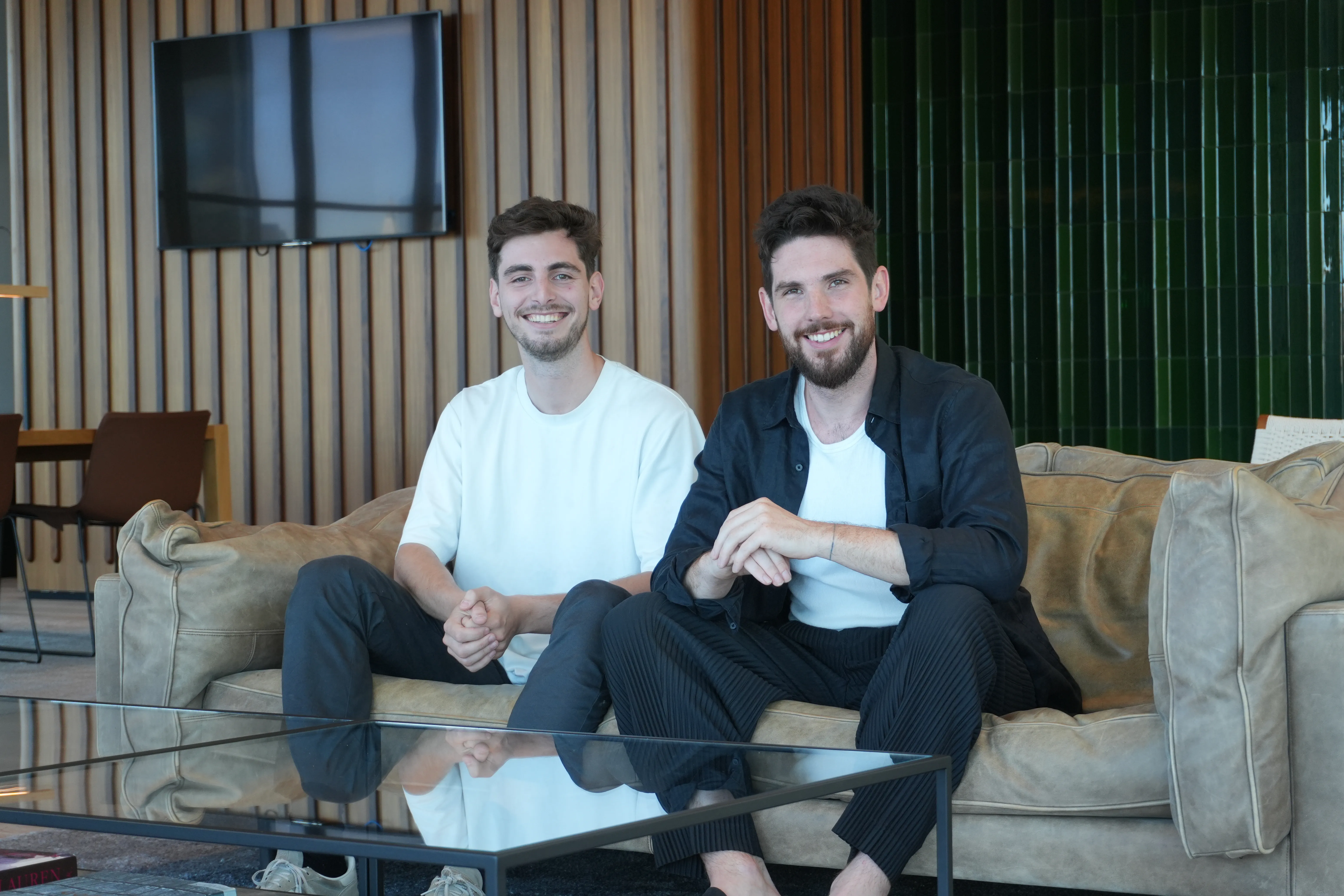
Ben McClusky and James Stirrat-Ellis, co-founders of Build
If you look west from our New York office, you can see Little Island, a manmade park floating on a bed of giant tulips over the Hudson River. Commissioned by Barry Diller and Diane von Fürstenberg, and designed by the world-renowned Heatherwick Studio, the project was announced in 2012 and took years of planning before the first stone was laid in 2018.
What sets Little Island apart isn’t just the audacity of building a public greenspace atop 132 undulating columns suspended over the water. It’s that, unlike 99.9% of commercial real estate projects, the developer was afforded the time and resources to do it right.
James Stirrat-Ellis understands this as well as anyone. He got his start designing large-scale cultural infrastructure, first in Spain, then China, then in London at Heatherwick, working on the world’s most ambitious airport, Changi T5 in Singapore. After moving to California, he taught himself to code, eventually leading product at one of the first big agentic AI startups. It wasn’t until he left that job in 2024 and happened upon a desktop due diligence report for a data center—a $25,000 PDF that had taken a team of specialists six weeks to produce, and that James knew he could automate with AI in a fraction of the time—that he saw the opportunity for an entirely new category in agentic development.
For years, as James saw firsthand, the development industry has been capped by human labor, with multiple forces standing in the way of building anything, never mind anything extraordinary. Getting a building off the ground requires dozens of engineers, planners, environmental consultants, permitting experts, and other specialists, each working in sequence, handing off to the next. Critical flaws surface late, after time and capital have already been spent; the process repeats itself, taking months, if not years. Software, the answer in almost every other industry, hasn’t fixed the bottleneck, because buildings aren’t standardized in the way software requires. Every site is different, every jurisdiction has its own rules. Deterministic software breaks down at the edges, which in real estate is everywhere.
Build is James’s solution to the problem. He and co-founder Ben McClusky are building an AI operating partner for the built world, pairing human experts with agentic AI to help the world’s biggest institutions accelerate their most important projects. Build’s army of specialized agents evaluate sites simultaneously, not sequentially, across grid capacity, fiber access, planning constraints, environmental risks, and physical conditions. Domain experts with decades of experience review every output before it goes out. The result is a kind of AI-native neo-firm that produces higher-quality output with better verifiability and far more data, delivered 10 times faster and at half the price of the market. Oh, and it scales infinitely.
The market Build addresses is enormous and little touched by technology. Real estate is the world’s largest asset class, valued at over $23 trillion. It remains highly labor-intensive, with professional services (e.g. site selection, due diligence, permitting, design) accounting for 5-10% of a project’s total cost. For every $1 billion data center, that’s a $50-$100 million line item already demarcated on the developer’s spreadsheet. Build started with technical due diligence and has since expanded to a half-dozen services across different categories of infrastructure, all focused around data centers. Their vision is to eventually own the entire development lifecycle.
They’re off to an excellent start. Over the past year, Build has partnered with institutions managing over $2 trillion in assets, with a growing share flowing into data centers. That includes Fortune 500 companies, hyperscalers, the UK government, and iconic developers like Tishman Speyer. Early customers say it’s already irreplaceable, helping them move faster, walk into conversations more informed, and run multiple projects in parallel in a way that wasn’t possible before. One senior site selection manager at a Tier 1 global data center developer described the old process as “weeks of manual work, gradual elimination, and slow churn.” With Build, he says, “you’re identifying, validating, and ranking opportunities at the same time.”
Behind Build’s momentum is a backdrop that’s hard to miss. Demand for data centers rises higher by the day, with hyperscalers spending billions trying to build fast enough to keep up with compute demand. If the world can’t build data centers fast enough, the broader AI economy slows with it. James has said that Build exists to let the built world grow at the speed of technology—that AI can enable a new golden age for development where the pace of construction finally matches the pace of demand.
We’re thrilled to lead Build’s seed round and to partner with James, Ben, and the entire team. We believe they’re building something that could change how the industry works, making the kind of ambition that goes into a Little Island accessible to every developer, municipality, and institution.
Published — June 29, 2026