Garner: Bringing Intelligence to Healthcare’s Hardest Choice

Years before Nick Reber started Garner, he was a patient. After a long and painful healthcare journey - marked by misdiagnoses, unnecessary care, and surgery after surgery - he came away with a conviction that would eventually become the foundation for Garner: healthcare would work better if people could find the best doctors, and if choosing them was the easiest economic decision to make.
Most people choose a doctor with shockingly little information.They might rely on a friend’s recommendation, a name from their insurance portal, or the hospital brand they recognize. They rarely know whether that doctor has the best outcomes for their specific condition, avoids unnecessary procedures, or delivers care at a lower total cost.
In almost every other market, quality earns demand. The best products get more customers. The best restaurants get more reservations. The best software spreads from user to user. Better outcomes create more demand, and demand forces the market to improve.
Healthcare has never really worked that way. The best doctors do not automatically see more patients. Patients often pay the same or more regardless of whether they choose higher-quality care. And unlike almost every other market, cost and quality in healthcare aren’t correlated, and often move in opposite directions. More expensive care frequently means more procedures, more complications, and worse outcomes, not better ones. Employers absorb rising costs, employees absorb the confusion, and the system fails to connect quality with demand.
Garner is built to solve that. It partners with employers to offer it as a benefit to their employees. Its AI analyses billions of healthcare claims to identify the doctors who consistently deliver better outcomes at lower total cost. It then helps employees navigate to those doctors. When an employee chooses a Garner-recommended doctor, their out-of-pocket costs are covered. This works precisely because cost and quality aren’t linked - the best doctors are often the lower-cost ones, and the savings from steering patients toward them are what fund the patient’s free care. Medical bills are one of the leading causes of personal bankruptcy in this country. Garner takes that weight off families.
Garner is much more than a care navigation product. It's the AI-powered demand layer for healthcare - one that helps patients make better choices and, in doing so, makes the system more accountable. Better doctors see more patients. Patients get better care and pay nothing. Employers lower healthcare spend and improve outcomes for their employees. Quality finally becomes visible, measurable, and actionable.

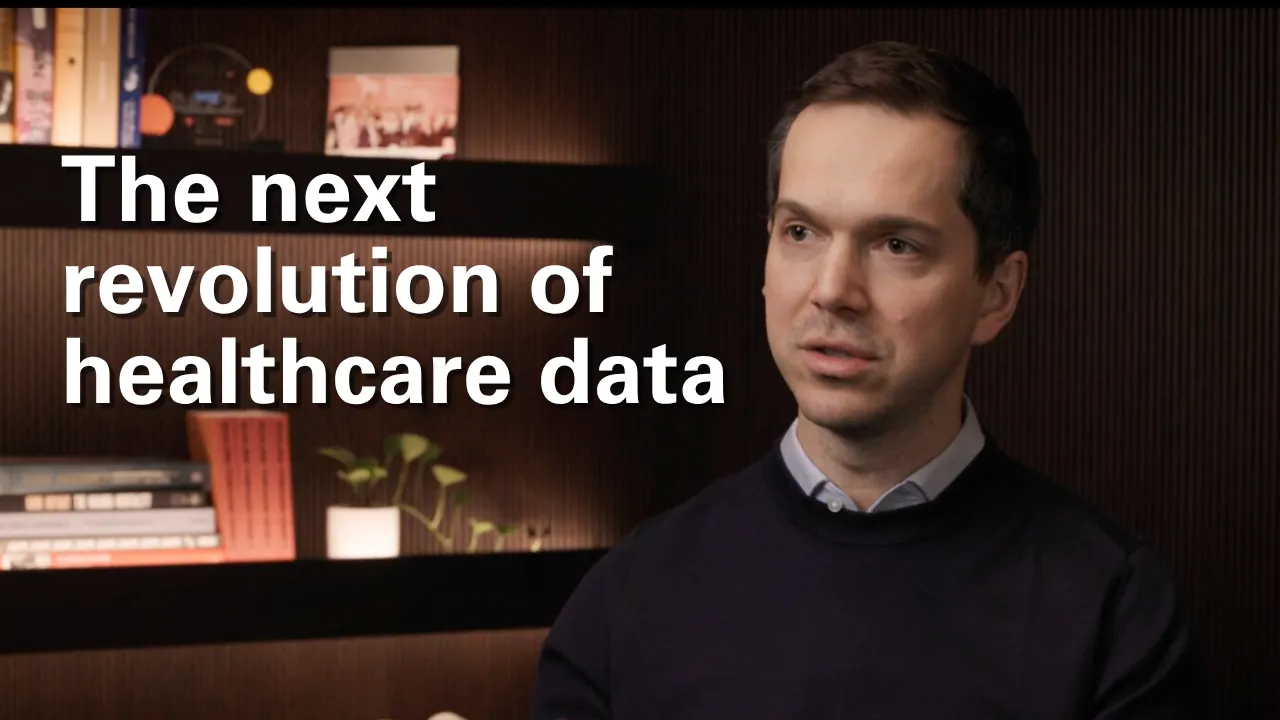

This is a deceptively hard problem. Quality in healthcare is not one universal score. It depends on the condition, the treatment path, the patient population, and the outcomes that follow. The data is fragmented, messy, and deeply contextual. Garner’s AI models make sense of that complexity and turn it into something simple enough for a patient to use at the moment they need care.
Garner is built with immense respect for the people who show up every day to care for others. The goal is not to replace clinical judgment or reduce medicine to an algorithm. It is to help a market collapsing under the weight of wasteful spending finally reward the care that works.
That deeply human mission convinced us from our very first meeting with Nick.
We are thrilled to partner with Nick and the Garner team as they build a more intelligent, efficient, and human healthcare market - one where quality is easier to find, easier to choose, and finally rewarded.
Published — May 28, 2026