In 1831, a former bookbinder’s apprentice, toiling in a candlelit basement at London’s Royal Institution, moved a magnet through a coil of copper wire and watched a needle twitch. Michael Faraday had never been to university and had almost no formal scientific training. But he was the first person to ask if a magnetic field could produce electricity, and to use his creativity and curiosity to pursue an answer. His discovery of electromagnetic induction would go on to power the Industrial Revolution, and the modern world that was to follow.
Most AIs flounder when faced with discovery. They’re trained to give good answers, not figure out which questions are worth asking, and they still can’t learn on the fly. They excel at convergent thinking in well-defined problem spaces. But they come up short when probing edge cases or stumbling into unknown-unknowns – the kind which produced the likes of penicillin, the microwave and the GPU.
The motivating belief behind Inherent, the London-based AI lab now emerging from stealth, is that machines capable of open-ended exploration can catalyze a wave of new inventions. Their system in development, Faraday, aims to put this into practice by helping humans and self-improving AI work together on the thorniest scientific problems of our time.
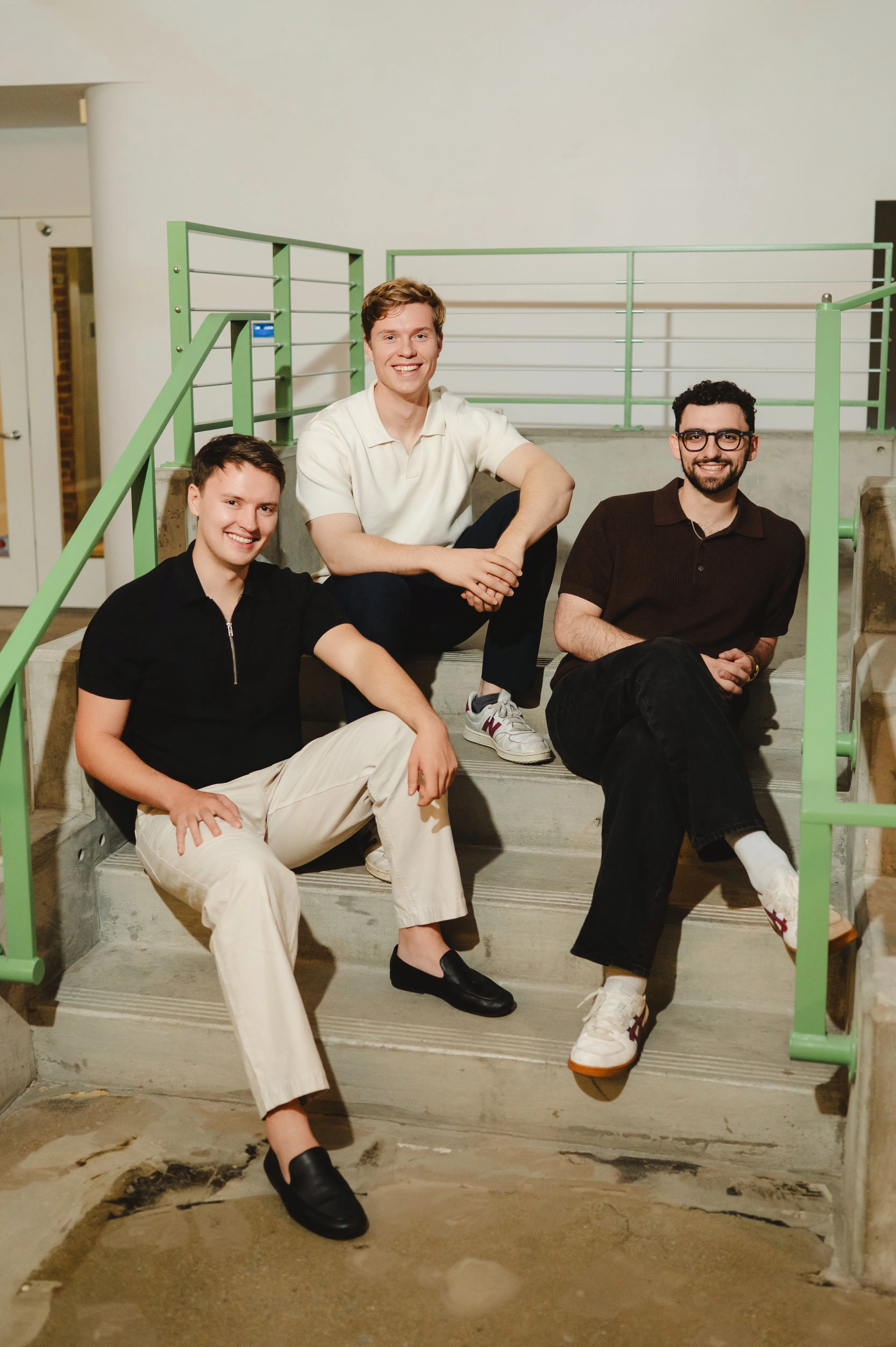
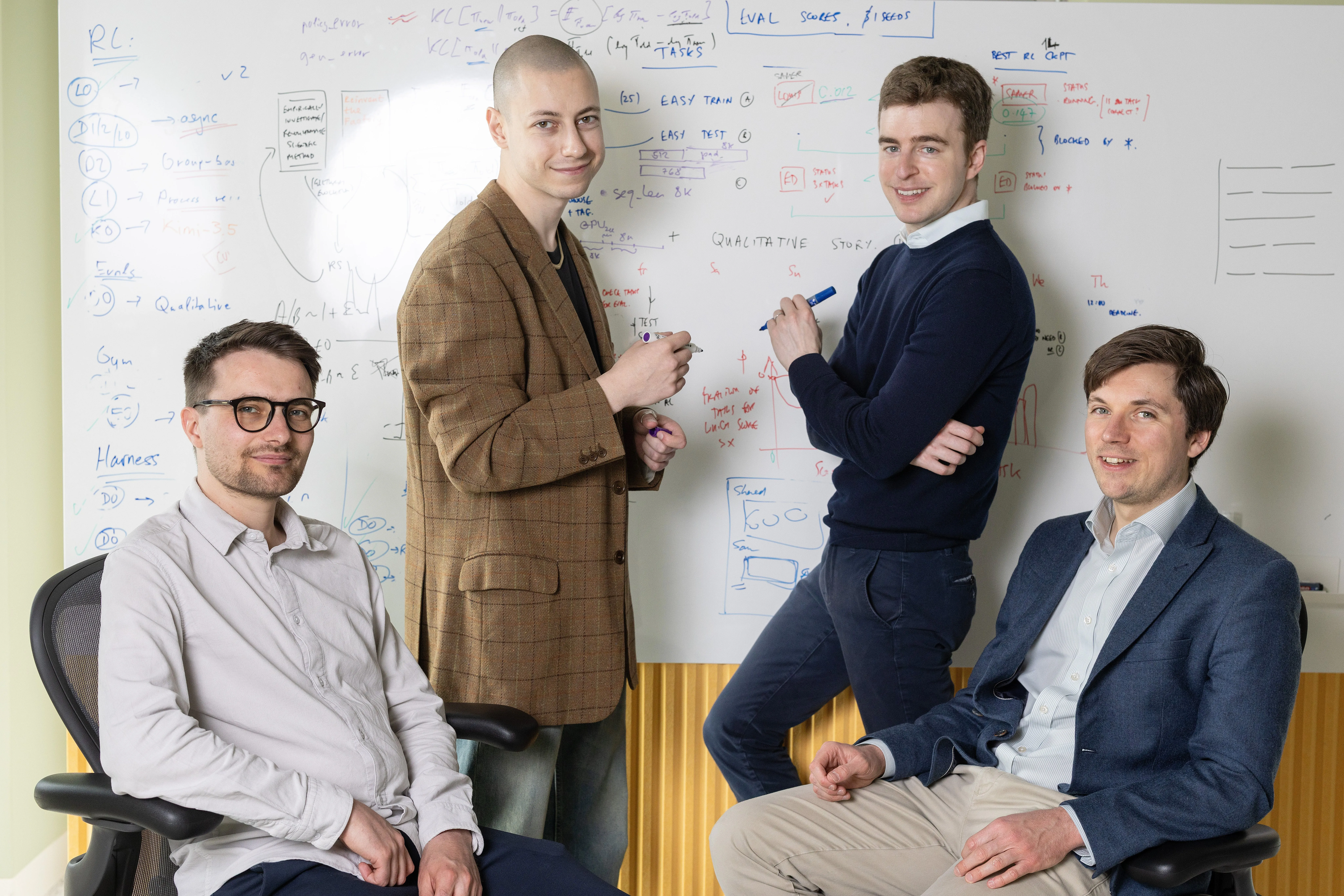
The founders bringing this vision to life are fantastic. Tantum Collins, Edward Hughes and Louis Kirsch are all technical DeepMind alumni, while Kaloyan Aleksiev brings infrastructure depth from Reka AI and Microsoft. They’re collectively obsessed with organizational design as a research problem in its own right. Inherent thinks that unlocking the potential of new technologies calls for genuinely new ways of working, while grafting AI onto the workflows of a prior era can only ever yield incremental gains. So how do you engineer for those productive collisions and creative chaos that fuel real discovery?
We got hooked by two aspects of their answer. The first is the idea that AI-native science will look and feel totally different to the scientific method we’ve grown used to over the past 400 years: it will be messier, less legible, but capable of exceptional outcomes. If Inherent succeeds, their bet is that the lab of the future will be as alien to us today as a modern research facility would be to a medieval monk, accustomed to searching for astronomical data in the Bible.
Much as a conductor channels the voices of a choir, doing science in the future may involve a sort of attuned orchestration, nudging human and non-human collaborators towards an emergent coherence. (As it happens, Edward has a parallel career as a professional choral conductor, which has informed his technical research into cultural evolution in AI systems.) The team intends to live this way themselves: the day-to-day choreography of how humans and AI agents work together at Inherent is itself part of their research, and will in turn inform the development of their platform.
The second thing that struck us was Inherent’s commitment to ethics and governance. The whole team thinks deeply about the second and third-order consequences of their work, and have chosen to set up the company as a public benefit corporation. Edward and Tantum first met while collaborating on frontier research in cooperative AI, and after DeepMind, Tantum handled AI policy issues at the Biden White House. Inherent’s early hires and angel investors include researchers and operators with expertise in technical safety and democratic applications of AI, and Matt Clifford CBE, who previously advised the Prime Minister on AI, is an advisor to the company.
The best companies build an internal culture that prefigures the world they want to manifest. Inherent is the most literal expression of that idea we’ve come across: a recursive company where the org design and the research feed one another in a continuous loop. We’re proud to stand with them to lead their $50m seed round, alongside Radical Ventures, as they design for the questions that no one has thought to ask yet.
Published — May 31, 2026