
Maximum Impact, Maximum Adventure: How Scott Morton and Revel Are Enabling the Next Generation of Hardware Companies
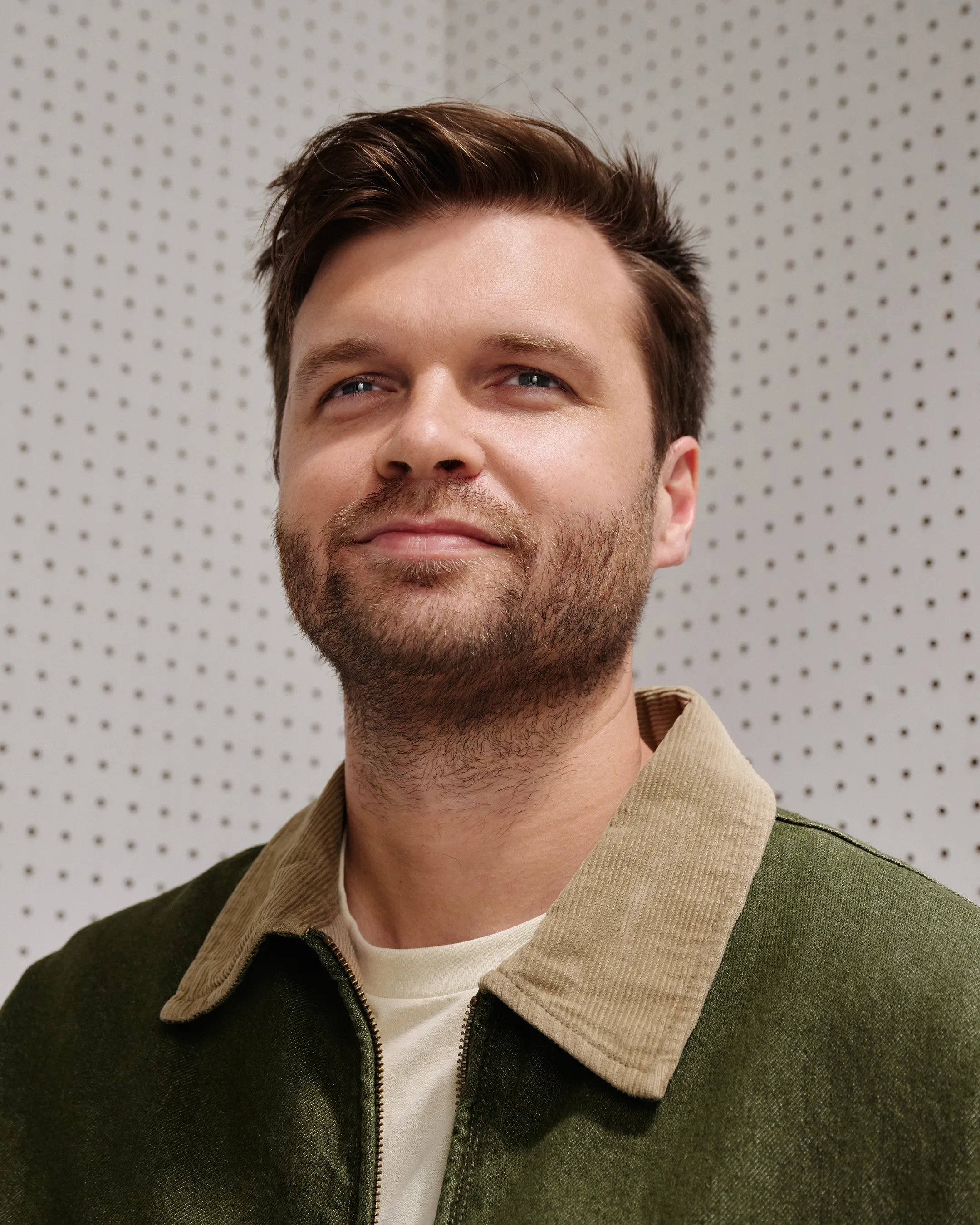
On a Friday morning in June 2024, Scott Morton set sail for Catalina Island, 30 nautical miles from Marina del Rey in Los Angeles County. It was a passage he had made dozens of times since moving to California to join SpaceX. Over the years, the island had become a place he could escape to with his wife and friends, get away from the city, and clear his mind.
This time, things were a bit different. For one, it was Morton’s first solo trip to Catalina — a crossing few sailors attempt alone, through the busy San Pedro Channel, where the waters run deep and commercial traffic is heavy. More importantly, he had business on his mind. For months, he had been weighing the idea of starting his own company. At SpaceX, he had spent the better part of a decade building mission-critical test and control software from scratch, doing so not by choice but because the legacy systems available were clunky and dated back to the 1980s. Working on early Starship in particular, he had seen how quickly a handful of engineers could move with the right tools. He thought other hardware teams, across a range of physical industries, deserved modern software to let them move just as quickly.
After mooring in Emerald Bay, Morton began writing in his notebook. First, he jotted down what he wanted from his life. Maximum adventure. Maximum impact. The ability to keep learning, to keep pushing the boundaries of what was possible. Entrepreneurship, he knew, would be challenging, at times painful. He was comfortable with that. On the flip side, there was plenty keeping him at SpaceX. It had been the ride of his life, nearly a decade spent on the hardest problems he could find, alongside some of his closest friends. The equity was substantial. His job was secure. And of course, there were all the unknowns. Will I be miserable? Will I be good at it? Will people want to join? Is this even a good idea? Failure, he understood, was a real possibility. Even so, he kept coming back to the payoff. What if we could help engineers move faster and create the next generation of great hardware companies?
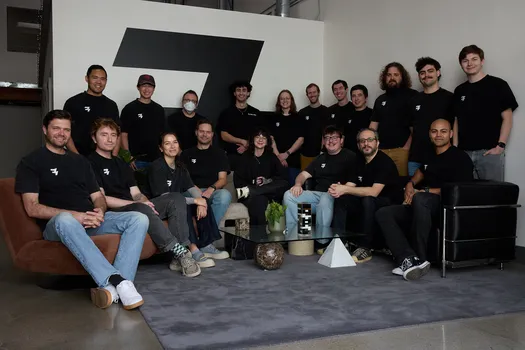
Less than two years later, Morton’s vision is coming into focus. His company, Revel, is at the forefront of a hardware renaissance, with a unified software platform for hardware test and control. Its customers include leading hard tech startups across aerospace, defense, robotics, and advanced energy, among them Impulse Space, Radiant Nuclear, Hermeus, K2 Space, Gravitics, and Aalo Atomics. Earlier this year, the company announced a $150 million Series B (what Morton called its “afterburner round”) led by Index Ventures, and its team is quickly growing with top engineering talent from the likes of SpaceX, Anduril, and Palantir.
Revel’s mission is to empower engineers to command the physical world with precision, creativity, and purpose. For Morton, that mission goes back long before Revel or even SpaceX. “I’ve always been building,” he says. Whether it’s a robot, a rocket, or a company, the challenge, as he puts it, has been learning how to make the thing do what he wants.

Seeing the Future
In the Morton family basement in Madison, Wisconsin, was a sprawling Lego metropolis of buildings, highways, and railroads. Every day after school, Scott would disappear downstairs to expand his city — a hospital, an airport, even a Lego space station hung from the ceiling. When he wasn’t putting things together, he was taking them apart. “It drove my parents crazy,” he says. “They would come home and find the vacuum in a hundred pieces.”
For much of his childhood, Morton had only a vague idea of what he wanted to be when he grew up. His father worked for the state as a water-quality specialist. His mother was an executive at a non-profit. It was Morton’s Grandpa Frank who pointed him down the path toward engineering. He had discovered electrical engineering while serving in the Navy during the Korean War; after earning his EE degree, he worked as a manufacturers’ representative in California before starting his own company producing power supplies, transformers, and time-delay relays, some of it as a subcontractor for aerospace companies. “I always thought it was amazing that he was an engineer who started his own company,” Morton says.



Despite his interests, Morton wasn’t particularly focused on academics. He describes himself as “rebellious” in middle school and high school, spending more time socializing than studying. “I didn’t care a whole lot about school,” he says. “I didn’t want to be seen as a nerd.”
After getting waitlisted at the University of Minnesota, he had to write supplemental essays to secure his admission. By then, the only housing left was on the agricultural campus, among the cornfields and livestock barns, a bus ride away from the main campus in Minneapolis. “That’s when it hit me,” Morton says, “if I want to do something interesting, I’ve got to get into gear.” At orientation, sitting with the rest of the incoming engineering class, he was told to look to his left, then his right. Two of them wouldn’t make it through the program. “I just decided I’m going to outwork all of them,” Morton recalls. “That’s one thing I know I can do.”
Morton quickly established himself as one of the department’s top students. As an undergrad, he took grad-level fluids courses and worked at the St. Anthony Falls Laboratory, designing scale-model wind and underwater turbines and testing them in the lab’s tunnel and water channel. He also got heavily into robotics, working in the Center for Distributed Robotics. The lab’s director, Nikolaos Papanikolopoulos, describes Morton as “very humble, down to earth, a team player who inspired everyone around him.” He recalls Morton’s passion, entrepreneurial streak, and knack for seeing into the future: “He was always full of business ideas, bringing plans, bringing devices, bringing prototypes and asking, ‘do you think this can fly?’”
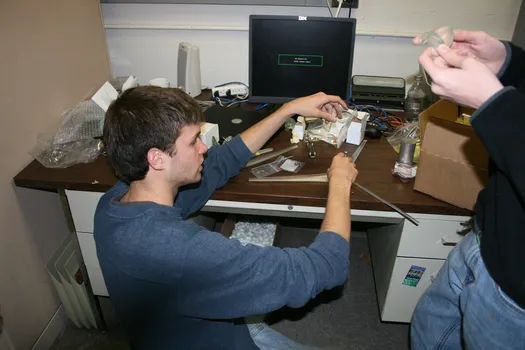

One day, Morton came to Papanikolopoulos with an idea sketched in a notebook. It showed a range you could control from your phone, precise enough to cook eggs at the perfect temperature. Papanikolopoulos laughed when Morton said he planned to take it to Whirlpool and KitchenAid. “They’ll eat you alive,” he told his student. But Morton insisted he could build a prototype, eventually putting together a business plan and applying to a hardware accelerator in Shenzhen, China. (Morton eventually abandoned the idea; more than a decade later, a precision cooktop was named one of TIME’s best inventions of 2024.)
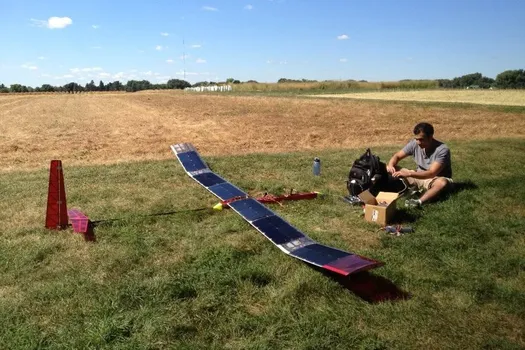
Near the end of his bachelor’s, Morton began working on solar-powered UAVs. He ran into a problem familiar to many in robotics, and across hardware broadly: he could build the drone, but he couldn’t write the code to make it fly. Moving from mechanical engineering to computer science was an unusual path, since it meant starting graduate coursework with none of the prerequisites, but he asked Papanikolopoulos to sponsor him for a master’s in CS. The professor agreed, on two conditions: that Morton stay in the lab, and that he publish at least four papers. Morton published five, researching everything from solar drones designed to stay aloft indefinitely to a concept for a vehicle that could both drive and fly.
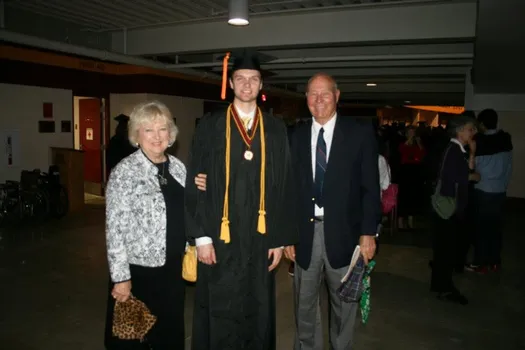
Throughout his time at the university, Morton always prioritized lab work. But in 2015, he did something he had never done before: he applied for an internship. Since his freshman year, he had been following SpaceX’s progress. When he saw a posting for a launch fluid systems intern, a role he felt uniquely qualified for given his background in fluids, mechanical engineering, and computer science, he decided it was too good to pass up. “I wanted to work on the SpaceX mission and see if I could hang with the best of the best,” he says.
Papanikolopoulos wasn’t thrilled. He had advised hundreds of students over 30-plus years; several had gone on to SpaceX and thrived there. Morton, however, he saw as fiercely independent, a born entrepreneur singularly focused on executing his own vision, and worried he would chafe inside any large organization. “I thought SpaceX would kill that creativity,” Papanikolopoulos says. Though he urged Morton to reconsider, he knew his student well enough to recognize there was no chance of changing his mind.
Before leaving Minnesota, Morton had committed to writing a grant proposal to the National Science Foundation (NSF) to advance the UAV research. He set his internship start date for the week after the application deadline and wrote the proposal himself. The day before it was due, he shared it with Papanikolopoulos. “He was not expecting it,” Morton recalls with a grin. They submitted it together, and Morton left for California. A few months later, the department received a letter from the NSF. The project had been fully funded with a grant for $1.5 million.
“Scott is the classic example of why you should not treat students in a traditional way,” Papanikolopoulos says. “You give him the resources and let him run. Sometimes you tell him, ‘You’re way off, come back.’ But you trust him. He will do what he wants, but he will do it in a way that is respectful, inspirational to others, and always very ambitious.”
The View from SpaceX
Morton arrived at SpaceX as a 25-year-old intern. Hanging over him was the uncertainty of what would happen after the summer. “I had to get the internship converted to full-time because I didn’t know if I could go back to the lab,” he says. Even so, he never doubted he had made the right decision. As he puts it, “SpaceX was everything I ever wanted.”
On his first day, he was thrown in with the simulation team, responsible for modeling the launch site in software so that launch code could be tested before it touched real hardware. He found a way to run the liquid simulations 1,000 times faster. The result was circulated across the department, and by the end of the summer he had his full-time offer.
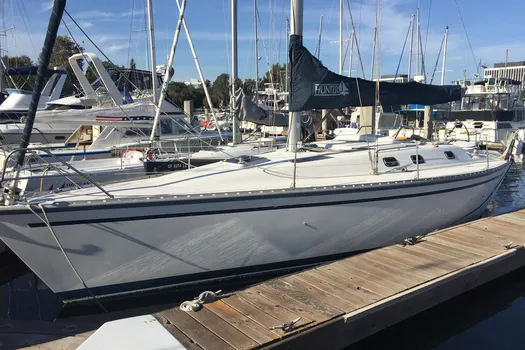
With one of his first SpaceX paychecks, Morton financed a 37-foot Hunter Legend sailboat, which he lived aboard for the next five years. Growing up in Wisconsin, he had learned to sail at family camp; his first boat was a daysailer he had to trailer to the water and rig by hand each time. Built in 1987, the Hunter was older than he was. He kept it docked in Marina del Rey and commuted every morning to SpaceX’s office in Hawthorne, where he worked on projects ranging from Falcon 9’s launch pads to a 75-ton robot that secured rockets to a droneship at sea, eventually joining Starship as a leader on the software engineering team.

“What stuck with me had almost nothing to do with rockets,” Morton wrote of his SpaceX experience in a July 2026 blog post. “It was the approach to building and operating an engineering company, and it applies far beyond the aerospace industry.”
“More often than you’d think, what was assumed impossible turned out to be a problem nobody had been willing to challenge and had the risk tolerance to try to solve.”
—Scott Morton, Revel
One of the main lessons he took was about collaboration and shared accountability. “When you’re building a rocket, everything has to work, or nothing does,” he says. The software he wrote was useless without the engines, the engines were useless without their supply system, and all of it together was highly suspect until the test teams had run it. “People didn’t push because a manager was standing over them; they pushed because they didn’t want to be the weak link that made everyone’s hard work worthless.”
The other big lesson had to do with the word “impossible.” Morton repeatedly watched outsiders declare that a booster couldn’t be landed, or that it couldn’t be reused, or that it couldn’t be reused reliably. Each time, he says, the team deconstructed the problem and sorted the constraints imposed by physics from assumptions that had simply been accepted and never tested. “More often than you’d think, what was assumed impossible turned out to be a problem nobody had been willing to challenge and had the risk tolerance to try to solve.”
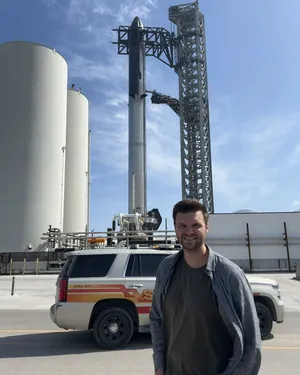


Meanwhile, another pattern emerged that took him back to the robotics lab in Minneapolis. At SpaceX, the engineers who understood physical systems best were the ones who had designed them. They knew what a valve was supposed to do, what it should react to, how the sequence ought to unfold when something went wrong. But they couldn’t express any of that directly. They had to describe it to a software engineer, who would encode it, and then the two of them would iterate — the hardware engineer explaining again what they meant, the software engineer revising, back and forth, until the logic finally matched the intent.
“I wondered, what if there was a company that provided all that infrastructure and let those teams, and the rest of the world doing very difficult things, like the things we were doing at SpaceX, move at a similar pace?”
—Scott Morton, Revel
On Falcon 9, the answer had been a workaround. The team took commercial control software built for lab instruments and adapted it into something that let hardware engineers write at least part of their own logic. It was crude, but it worked. Starship was a new program and a new vehicle; Morton and the engineers around him asked themselves what they would want operating on Mars. The team surveyed what was available to buy for testing and controlling hardware and found that all of it dated to the 1980s and 1990s. So they wrote their own. What they ended up with was good enough that on early Starship, a small team could move at a pace that in almost any other organization would require far more people.
Throughout Morton’s time at SpaceX, the software kept improving, but only to a point. “It was always more important to get the rocket to fly than to invest in infrastructure to go faster later,” he says. He knew the approach made sense from a business standpoint. But watching the pattern repeat for years, he felt there had to be a better way.
By 2024, something else was starting to bother him. He had joined Starship when it was still something of a “backwater project”; the team had built the system from scratch, scaled it to an orbital-class vehicle, and was now running both the launch site and the vehicles for the largest rocket ever flown. After the first orbital flight, one of the biggest problems in software was testing and simulation, so he took that on too, and got it into good shape. At that point, he wasn’t sure what was next. “I like to jump into the hardest thing I can, and I didn’t see another big greenfield problem coming on the program for quite some time,” Morton says. “I asked myself, how can I have the most impact on the future? And I just felt that was kind of dropping off.”
Reflecting on his years at SpaceX, Morton is grateful for everything he learned there. He sees its influence on a new generation of founders, and believes there’s a reason why so many former employees have gone on to start companies in difficult physical industries. “What they’re carrying out the door is mostly a worldview,” he writes. “That ambitious goals are normal, that the hardest physical problems are the ones most worth a career, and that a great majority of limits people accept wouldn’t survive a serious attempt to break them.”
Running with Revel
In the fall of 2024, Morton began building in stealth. When he told his old SpaceX colleagues what he was working on — a software platform for hardware testing and control — many balked at the idea. Why buy something you could build yourself? Morton understood their skepticism. “As a software engineer, when you’re faced with a problem, you write software to solve it,” he says. But to a hardware engineer, software is a means to an end — the thing standing between you and what you’re trying to create. A company like SpaceX could afford to build software systems from scratch; most hardware teams don’t have the internal expertise or capital.
When Morton began calling prospective customers at hard tech startups, they confirmed his thesis. Some had built systems in house, but that required significant software engineering resources, and nobody seemed particularly happy with the results. Most were using commercial tools based on graphical languages, where engineers assemble logic by dragging blocks and wiring them together (what Morton likens to “programming with crayons”), or on Structured Text, a language derived from Pascal and standardized for industrial controllers in the early 1990s.
“I had a lot of empathy for these engineers who were using Windows 98 level technology for developing the most badass, cutting-edge satellites and hypersonic aircraft,” Morton says. “It just seemed insane to me that they were stuck with these terrible solutions.”
“Revel really made things go so much faster — what used to take weeks now takes days. The cost savings have been massive in both people and time.”
—Dane Sarcone, principal test engineer at Impulse
Morton set out to build a state-of-the-art software platform that makes commanding hardware accessible to the people who build it. It runs entirely in the browser, combining an intuitive command-and-control interface, a specialized programming language built for hardware, and a high-performance runtime environment. Hardware engineers can learn it without becoming programmers, and because everything is text-backed, software engineers get real code. “It’s a medium that’s approachable to both types of engineers,” Morton says.
Revel emerged from stealth in April 2025 with $30 million in seed and Series A funding. The company’s first customer, Impulse Space, reported benefits such as 10x faster test stand setup, increased ownership for operators (who can make sequence changes and deploy setups without involving software engineers), and the ability to mix hardware from multiple vendors in a single system, including lower-cost industrial hardware. “Revel really made things go so much faster — what used to take weeks now takes days,” says Dane Sarcone, principal test engineer at Impulse. “The cost savings have been massive in both people and time.”
“Scott cares deeply about customers because he’s been in their shoes... He’s very intellectually honest."
—Nina Achadjian, Index Ventures
The platform has brought similar value to hardware teams across other industries, from defense to robotics to manufacturing. Partly that’s a function of how Revel sells. Rather than pitching executives, the company sends its engineers to a customer’s site and sets the system up on their actual hardware, at an actual test bench, then leaves it running free for a month or two. Only once the engineers using it are convinced does anyone discuss commercial terms. “Scott’s less concerned about the VP or the exec who holds the purse,” says Jess Winssinger, Revel’s head of product. “He cares about convincing the engineers that the product is valuable.”
Index partner Nina Achadjian, who led Revel’s Series B, calls Morton’s combination of empathy, authenticity, and credibility one of the company’s biggest advantages. “Scott cares deeply about customers because he’s been in their shoes,” Achadjian says. “He’s experienced their pain and is able to build trust quickly.” In December 2025, Morton showed Achadjian a list of prospects he planned to close over the holidays. For the next few weeks, she got a text from Morton nearly every day saying he had closed another customer. “He’s very intellectually honest, and doesn’t oversell,” Achadjian says. “There’s no hype around it. He’s very credible.”
Having initially focused on its test product, Revel has begun expanding into industrial control. Where testing, as Morton describes it, is a relatively contained problem, control is what runs a system once it’s real and operating — a nuclear facility, an oil refinery, a water treatment plant, a power station, a defense system, a data center. The underlying problems are the same ones the team was already solving: real-time telemetry, hardware-agnostic control, commands that execute safely, systems that can be reconfigured without being rebuilt.
He’s candid that this makes Revel two businesses at once. “We’re getting pulled in a lot of directions right now, which is great, but it’s a threat too,” he says. “We’ve got to make sure we can keep progressing in both areas without being just okay at both.” He continues to be encouraged by what happens once the software is inside a company. A major defense contractor went from zero to 25 deployments within two months. “Once you get in and people actually experience it, it just kind of takes on a life of its own,” he says.
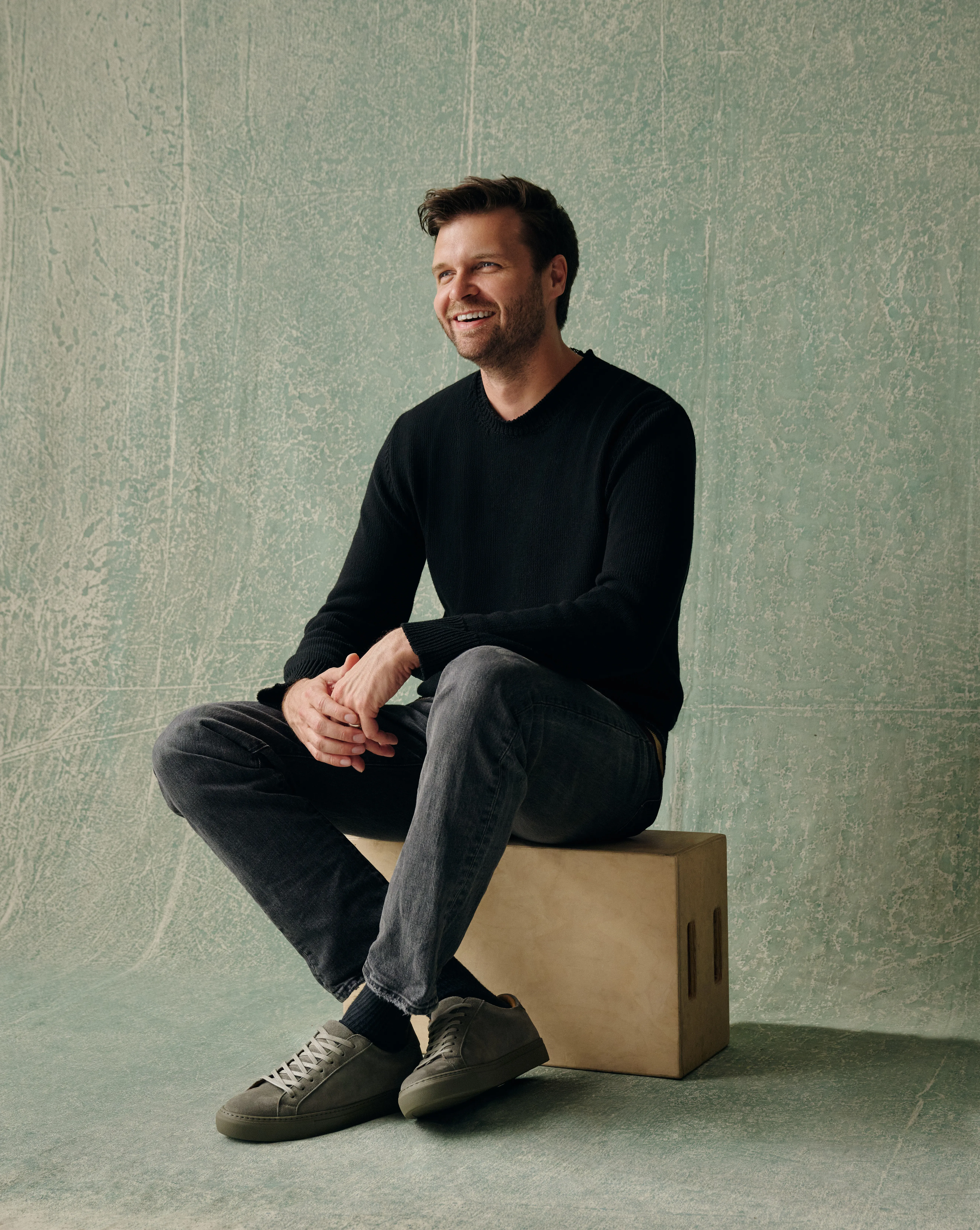
Scott’s very much an optimist. He wants to have a good time, and he wants to do right by people.... He didn’t grow up wanting to be President, or the CEO of General Motors. He grew up wanting to build things of value.Jess Winssinger,
Head of Product at Revel
Maximum Impact
In September, Revel will celebrate its two-year anniversary. While Morton is careful not to get too far ahead of himself, he allows himself a moment to reflect on the team’s progress. “We’ve had a fortunate run, as startups go,” he says. “As we pick up more and more customers, our trajectory is starting to feel kind of inevitable. Now we just need to figure out how to scale it.”
For the first time in his career, scaling is more of a team challenge than a technical one. “I’ve really grown to appreciate how hard it is to build a company,” he says. “We need to get the right people in the right positions, and get them properly equipped to be successful.” He notes that key hires like Winssinger have made a world of difference. “It’s like night and day for my daily experience. They’ve made things so much easier and solved so many different problems.”
Winssinger, who joined Revel from Palantir, calls the company’s culture a direct reflection of Morton’s background and personality. “Scott’s very much an optimist,” she says. “He wants to have a good time, and he wants to do right by people.” She sees an engineer’s mindset in the way Morton leads the company. “Just the empathy he has for customers and the creative way he thinks about solving problems,” she says. “He didn’t grow up wanting to be President, or the CEO of General Motors. He grew up wanting to build things of value.”
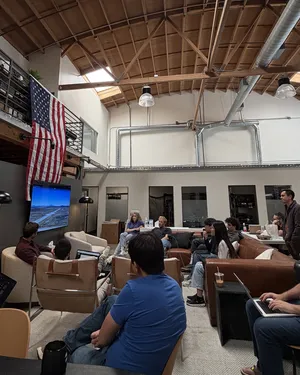
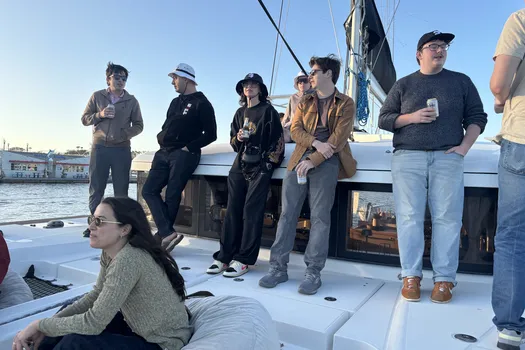
At SpaceX, Morton’s team wore smartwatches during a launch; afterward they would compare heart rates and note where each person had their “freakout.” Entrepreneurship, he says, brings a lower-grade, but more constant stress. “I don’t think it ever approaches sitting there at launch and the countdown sequence is going and you’re just like white knuckles, oh my god, what’s about to happen… but in other ways it’s a much higher level of stress, because you have all these people relying on you, you’re building critical infrastructure that all these amazing companies rely on, and as a single founder, everything is on me.”
He’s not shying away from it. From the robotics lab in Minnesota to his internship at SpaceX, to starting Revel to enable the next generation of hardware companies, he says the throughline of his career has been “throwing myself into the hardest thing and seeing if I can do it.” Written in a notebook somewhere is the life he envisioned before starting Revel: Maximum adventure. Maximum impact. The ability to keep learning, to keep pushing the boundaries of what’s possible. “This is everything I hoped it would be,” he says.
Published — Sept. 2, 2026
-
 This link opens the post, "Candid with Index: In Conversation with Fireworks’ Lin Qiao"
Candid with Index: In Conversation with Fireworks’ Lin Qiao
This link opens the post, "Candid with Index: In Conversation with Fireworks’ Lin Qiao"
Candid with Index: In Conversation with Fireworks’ Lin Qiao
-
 This link opens the post, "Radical Care: Why Alan’s Co-Founder is Rewriting The Rules of Healthcare"
Radical Care: Why Alan’s Co-Founder is Rewriting The Rules of Healthcare
This link opens the post, "Radical Care: Why Alan’s Co-Founder is Rewriting The Rules of Healthcare"
Radical Care: Why Alan’s Co-Founder is Rewriting The Rules of Healthcare