Wealth Management for a New Generation: Wealthfront Goes Public
In 2013, I was catching up with my friend Andy Rachleff. I’d known Andy for years, and even then, he’d had an interesting career. As co-founder of Benchmark, he was enormously successful as a venture capitalist before retiring as a partner and joining the faculty at Stanford’s business school, where he became one of its most beloved professors. In 2008, he co-founded kaChing, offering a new approach to crowd-sourced stock picking. This first concept wasn’t really working well. But when he told me he was thinking about pivoting the business to wealth management, my ears perked up right away.
The problems he described were familiar—an industry riddled with hidden fees, misaligned incentives, and so-called advisors whose real job was to keep you engaged with steak dinners and basketball games. Not only had I encountered these irritations myself as a consumer, but I had also learned a bit about the mechanics of the business through my father, who led UBS’s wealth management group for Italy.
Andy’s vision felt radically different. He described a service that was: 1) fully automated and digitally native, with no human middleman, 2) transparent about what exactly was happening with your money, and 3) designed to deliver the lowest possible fee burden to consumers. In the world of finance, where companies often profit at the expense of their customers, a vision like Andy’s was exceedingly rare. But to us at Index, it felt like a winning card. By the time we led the Series B, kaChing had rebranded as Wealthfront, built on the same technological underpinnings but with a vastly different audience and business model.
Looking back, some parts of the opportunity were obvious even then. The market for wealth management is enormous and always will be. But other parts of the thesis required a leap of faith. At the time, the conventional belief was that people would never entrust their life savings to a website. If something went wrong, you’d want a person to talk to. That was probably true for Gen X and baby boomers, but for millennials who grew up online, the opposite view was taking shape. They trusted digital systems more than they trusted people.
The other contrarian view was around passive versus active investing. Evidence clearly showed that over the long term, low-fee passive management produced better outcomes for most people. But the industry reinforced a message of active management—because without it, why would you need an advisor? Wealthfront bet that what future generations really wanted was digitally native, passive investing with low fees, better results, and an experience that fit their lifestyle.
Even with the right model, building trust takes time. When you’re asking people to deposit their life savings, they don’t move it all at once. They start small, watch how the service performs, and gradually add more. Like wealth, trust accretes over the years.
Product breadth matters too. In financial services, most consumers expect a suite of services. It’s a lot easier to keep track mentally if your savings, mortgage, and credit all sit under one roof. Legacy banks had that breadth, which lent them credibility. Wealthfront had to catch up one product at a time: joint accounts, cash management accounts, college planning, and mortgages. Each addition required new development, new relationships with program banks, and new regulatory overlays. But as the product suite expanded, so did consumer confidence. Today, Wealthfront feels closer to a full-service financial institution, only more affordable, more convenient, and, most importantly, more transparent.
Inside the company, the culture mirrors the product. This is an organization built, structured, and managed by engineers. Almost everything is automated. The team resisted the temptation to “throw people at the problem” and instead engineered systems built to last. That purity extends to product decisions, saying no to speculative side bets like options trading or high-touch sales to ultra-wealthy individuals. While other fintechs tried dabbling in esoteric products or short-term strategies with recurrent fees, Wealthfront stuck to its path, even when it was slower and harder.
The story of Wealthfront is the relationship between Andy and David Fortunato, who joined as CTO in the early days and became CEO in 2021. Where Andy brings charisma, decades of experience, and loads of frameworks about how companies should be built, David, in many ways, is his opposite—quiet, introverted, relentlessly first-principled. He’s not your typical swashbuckling Silicon Valley exec. He commands respect through his thoughtful nature and exceptionally good decision-making. Andy has told me about debates where, a month later, he’ll wake up and realize “David was right.” That speaks volumes about the way the company has been led and how it’s arrived at this milestone, with so much still to come.
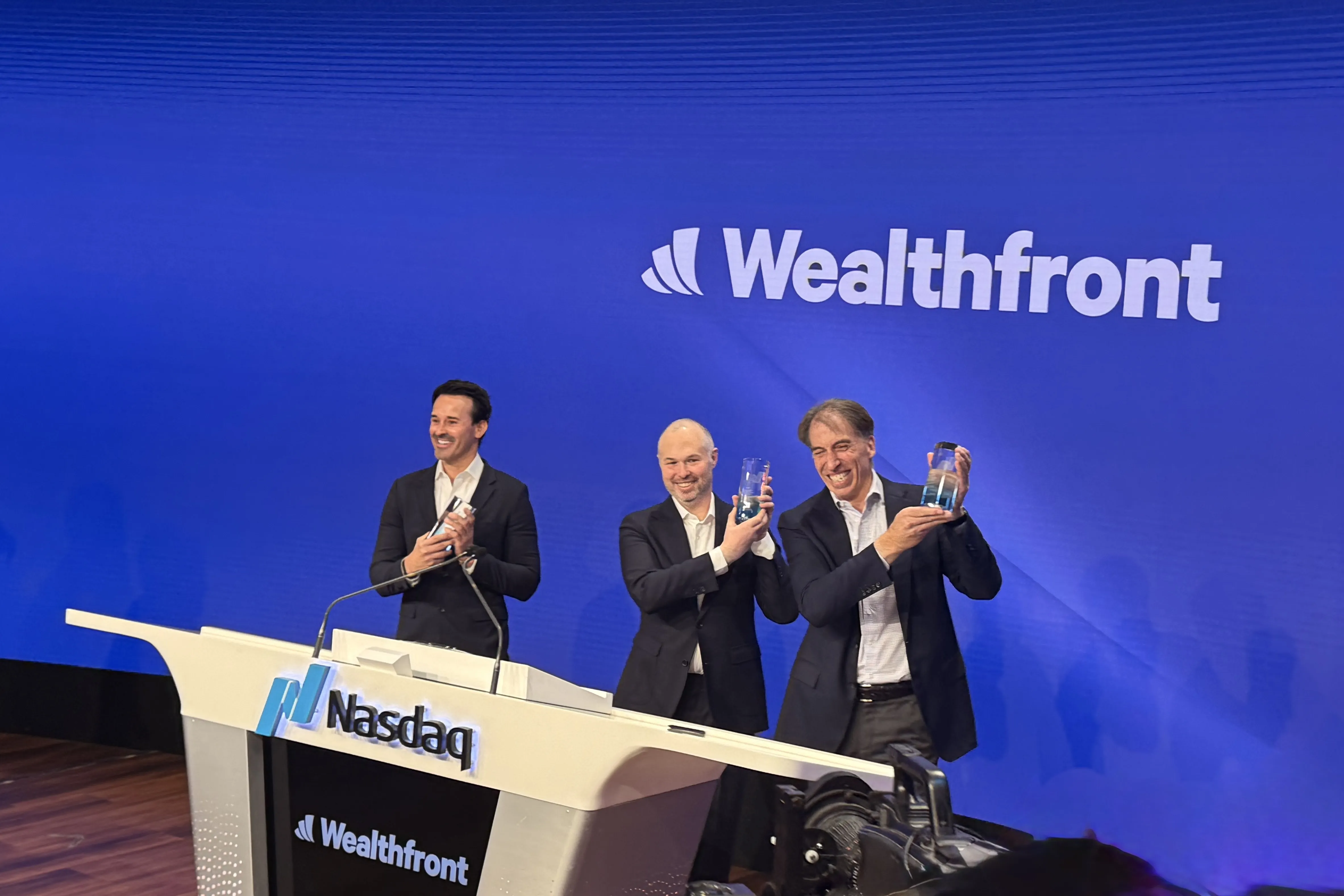
Today, as Wealthfront prepares to go public, this is an event worth celebrating, but it’s not the endpoint. We’ve always known that a company like this—taking relatively little in fees while giving so much back to the consumer—would take longer to reach scale. The IPO matters because brand matters. In wealth management, where trust is everything, being a publicly traded company is a powerful signal. It says: our financials are open, our governance is accountable, you can trust us as your savings and investing partner.
Congrats to Andy, David, Dan Carroll, and the entire Wealthfront team. Today is a milestone of how far you’ve come, and a shining signal of how far you can go. The long game of building trust with a new generation of investors is only just beginning.
Published — Dec. 12, 2025