Toward More Efficient AI: Leading Flapping Airplanes’ $1B Series A

Ben, Asher, and Aidan live by the idea that just because something has always been done one way doesn’t mean it has to stay that way. They started Flapping Airplanes with a belief that AI could be orders of magnitude more efficient, and a broader conviction that for this technology to reach its full, world-changing potential, someone would have to question the assumptions behind it and rebuild from first principles.
Since we led their seed round earlier this year, it’s been amazing to see them apply that same thinking to every part of building the company. They operate a bit like a test kitchen for frontier AI. Ben, as CEO, is a firehose of ambitious ideas that can sound outlandish at first, until you see the logic behind them. Asher brings analytical rigor and clarity to his brother’s thinking, helping decide which ones make the menu. Aidan adds an infectious energy and sincerity that sets the tone for the whole team. Then, together, they execute on those ideas relentlessly.
One of the best examples of that first-principles thinking is the way they’re building the team. They believe in slope — that smart, hardworking people can reinvent a field without much experience, and sometimes even because of it. It’s why they hire for skill and trajectory over age or pedigree, finding talent in pockets most companies overlook. They also invest in developing that talent, pairing team members so they learn from one another and giving them real ownership early. One engineer joined while still in high school and went on to build the agent infrastructure that now automates much of the team’s work. Another had never trained a model before joining, then led the company’s entire pre-training run.
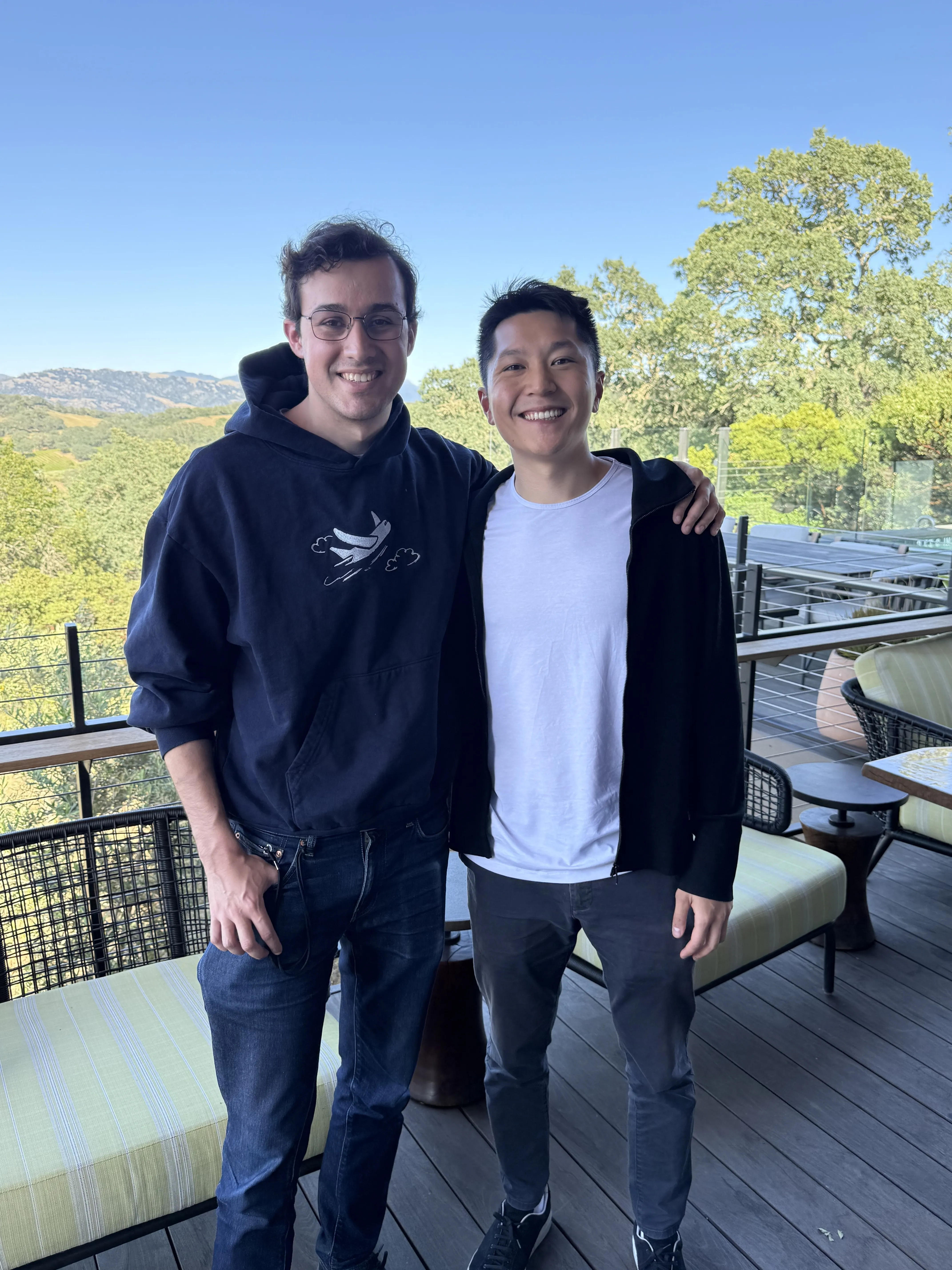
Flapping Airplanes CEO Ben Spector and Index partner Mark Xu.
With just a couple dozen people, all working in person in San Francisco, this may be the most vertically integrated company per capita in AI. The team works across the stack, from the kernels that run on GPUs through pre-training, post-training, and inference, optimizing each layer with the others in mind. It reflects a pattern the founders see throughout the history of machine learning — that the biggest algorithmic breakthroughs are preceded by new ways of interacting with hardware. Flappy’s megakernels, which run an entire program on a GPU as a single kernel, eliminate the wasted time between steps and get more out of every GPU. That enables today’s chips to become more flexible and more valuable, which benefits the entire ecosystem, from the companies making them to the ones building on them.
Those efficiency gains are only becoming more important. The demand for AI will continue to far outpace the supply of the key inputs, compute and data. The winners in AI will be the companies that get the most out of every dollar, every megawatt, and every byte of data. That efficiency is what will unlock the world’s biggest markets, like robotics, trading, and life sciences, where AI is still too expensive or the data is too scarce.
Over these past months, we’ve watched Ben, Asher, and Aidan steer Flappy in directions none of us could have predicted, by rethinking everything from the ground up. We’re thrilled to double down and lead their $1B million Series A, with Mark joining the board. If the future of AI depends on getting more from less, we can’t think of a better team to shape it.
Published — Oct. 21, 2026